
Ransomware
Establish a response path covering isolation of infected hosts, evidence preservation, and backup restoration, with clear recovery priorities and decision points to minimize business downtime.

Solutions · Information Security
Targeting typical security incidents such as ransomware, data breaches, and supply chain attacks, we deliver an end-to-end service spanning emergency plan development, tabletop exercises, and live-fire drills. Grounded in the PDCERF methodology and backed by 7×24 security operations, our service continuously strengthens your organization's incident handling capabilities.
Service Overview
Solution Positioning
An information security program relies on layered defense-in-depth, and incident response with drills serves as its last line of defense. When defenses are breached, whether the organization can rapidly detect, effectively contain, and cleanly recover directly determines the actual impact of the incident. Targeting typical scenarios such as ransomware, data breaches, supply chain attacks, and website defacement, Zhaoxun develops actionable emergency response plans for enterprises and validates their feasibility through repeated tabletop exercises and live-fire drills, continuously improving coordinated response capabilities across the organization.
Incident handling follows the industry-standard PDCERF model, covering six phases—Preparation, Detection, Containment, Eradication, Recovery, and Post-Incident Tracking. We implement tiered incident response, conduct forensic investigation and attribution throughout, and drive closed-loop remediation through post-incident reviews. Combined with our 7×24 Security Operations & Real-Time Monitoring (MSSP), anomalies are identified at the earliest stage—so attack windows during nights, weekends, and holidays are never left unattended.
Founded in 2022, Zhaoxun is an ISO/IEC 27001:2022 certified company and a Sangfor Gold Partner. Our proprietary Aegis-ASM Attack Surface Management Platform and Intelligent Security Management Platform (capable of million-scale vulnerability management, 8 built-in security engines, and AI-powered security agents) translate lessons learned from incident response into sustained, day-to-day security operations capability.
Typical Scenarios
Establish a response path covering isolation of infected hosts, evidence preservation, and backup restoration, with clear recovery priorities and decision points to minimize business downtime.
Cover scope definition, impact assessment, and notification workflows, combined with forensic investigation to identify the breach source and maintain a complete chain of evidence for accountability.
Address risks introduced by third-party software and outsourced services through vendor coordination and controlled failover mechanisms, preventing lateral spread via the chain of trust.
Standardize actions from detection and evidence preservation to rapid restoration and relaunch, combined with real-time monitoring to shorten exposure windows and reduce brand and reputational damage.
Methodology
Map critical assets and business priorities, develop tiered response plans, clarify the command chain and resource inventory, and complete readiness checks on tools and backups.
Identify anomalies through 7×24 real-time monitoring and alert triage, rapidly determine the incident type and severity to buy time for subsequent response actions.
Isolate affected hosts and network segments, block attack channels and lateral movement paths, control the impact scope while preserving on-site evidence.
Trace the intrusion path and identify persistence mechanisms through forensic investigation, completely remove malware and unauthorized access to prevent recurrence.
Restore business systems and data according to the playbook sequence, verify integrity and security before bringing systems back online, and continue monitoring for signs of regression.
Conduct a full post-incident review and archive, evaluate the actual performance of the playbook and command chain, route incomplete remediation items into a tracking list with deadlines, and feed lessons learned into subsequent drill scenarios.
Drill Framework
A process-walkthrough format that engages multiple roles in a scripted run, offering a low-cost way to validate playbook completeness and command chain effectiveness.
Hover / tap to flip ↻Ideal for validating early-version playbooks and onboarding new teams: systematically check decision points, notification paths, and resource activation, then output a walkthrough issue list as a direct basis for playbook revision.
View Information Security Solutions →Inject simulated security incidents into real environments to end-to-end test monitoring detection, triage, response, and coordinated recovery capabilities.
Hover / tap to flip ↻Leverage the Intelligent Security Management Platform to inject realistic attack techniques, measure detection and response timeliness, expose gaps in the toolchain and processes, and calibrate playbooks under pressure.
View Information Security Solutions →Attack and defense teams engage in sustained confrontation around critical assets to test the resilience of the defense system under realistic pressure.
Hover / tap to flip ↻The Blue Team reduces exposure through MSSP 7×24 operations and Aegis-ASM Attack Surface Management, while the Red Team adopts an attacker's perspective to seek bypass paths. Joint post-exercise reviews turn findings into detection and hardening strategies.
View Information Security Solutions →After drills and real incident handling, produce post-exercise reports that convert identified issues into remediation tasks tracked to closure.
Hover / tap to flip ↻Root-cause analysis across technology, process, and people dimensions feeds updates to playbooks, detection rules, and on-call manuals. Remediation outcomes feed into the next round of drills, forming a continuous improvement cycle.
View Information Security Solutions →
Using the SOC as the central hub for continuous monitoring, alert triage, and threat analysis, augmented by security agents within the Intelligent Security Management Platform, we shift incident response from post-event remediation to pre-event detection and in-event coordination.
Learn More
Delivering 7×24 security operations and real-time monitoring as a managed security service, the on-duty team and incident response unit share one playbook and command chain. Anomalies are logged end-to-end from detection and triage through escalation, ensuring seamless continuity between daily operations and incident handling.
Learn More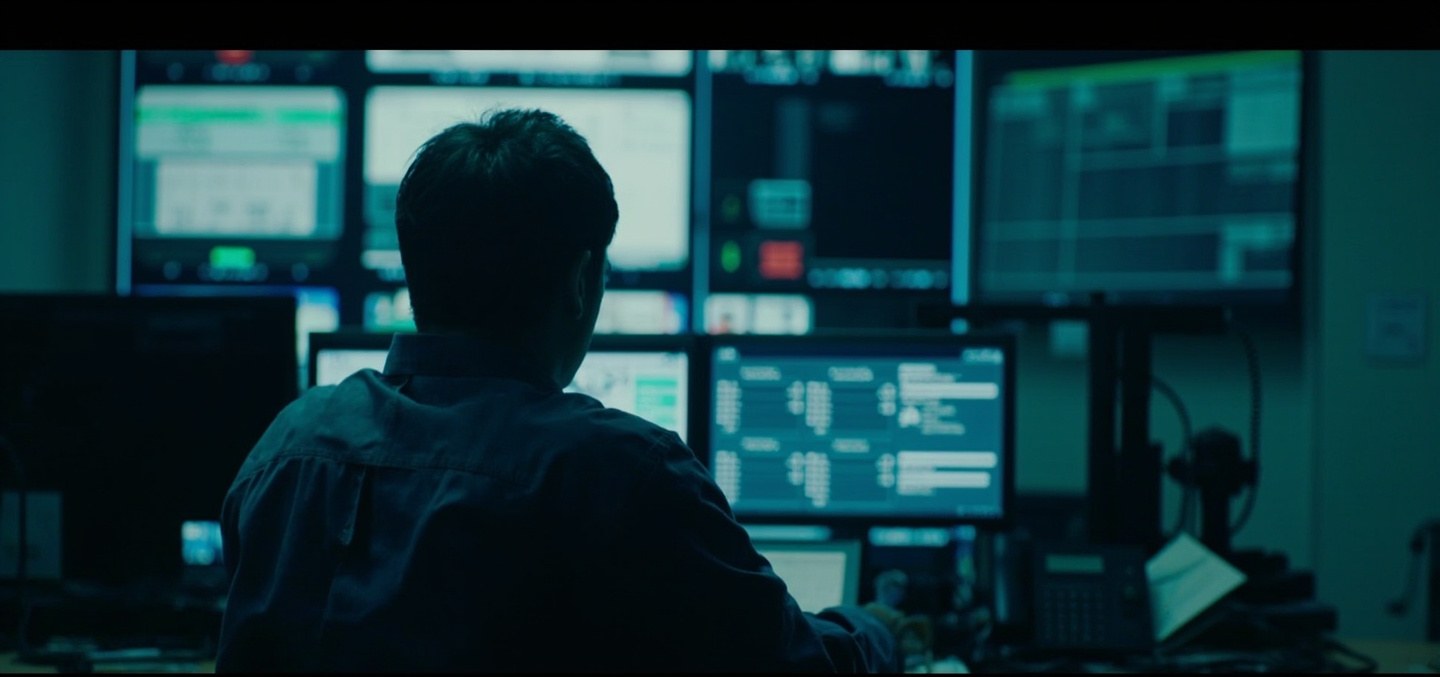
The tiered incident response mechanism covers escalation paths from routine alerts to major incidents. Evidence is preserved and forensic investigation is conducted throughout the process, supporting accountability and subsequent disclosure—making every incident traceable and verifiable.
FAQ
Tools address "can we defend," while drills address "can we respond." In real incidents, only tabletop exercises and live-fire drills can verify whether the command chain is clear, notification paths are smooth, and backups can be restored in the correct order—and they continuously expose gaps in process and coordination.
PDCERF is an industry-standard incident response methodology that divides the response process into six phases—Preparation, Detection, Containment, Eradication, Recovery, and Post-Incident Tracking—ensuring each phase has clear objectives, actions, and owners, avoiding confusion and omissions.
The two are not mutually exclusive. Tabletop exercises require low investment and carry minimal risk, making them ideal for quickly walking through processes after a playbook update or when onboarding a new team. Live-fire drills inject simulated incidents into real environments to test monitoring detection, triage, response, and toolchain performance. We recommend alternating them: use tabletop exercises first to streamline processes, then live-fire drills to calibrate capabilities.
It covers 24/7 real-time monitoring of security devices and logs, tiered alert triage, tiered incident response with escalation mechanisms, and coordinated response when needed—bridging the gap in after-hours and holiday coverage for in-house teams.
The core deliverable is a post-incident review report covering the incident timeline, root cause analysis, response timeliness evaluation, and remediation recommendations. Remediation items are tracked through to closure and serve as input for the next round of playbook updates and drill design.
Contact Zhaoxun to obtain emergency response plans and drill planning recommendations tailored to your business scenarios, or to request a demonstration of our SOC and MSSP security operations services.