
Vulnerability Scanning
Automated scanning across hosts, middleware, web applications, and network devices on a recurring basis, combined with expert triage to eliminate false positives and produce a continuously trackable asset risk baseline.

Solutions · Information Security
Integrated delivery of vulnerability scanning, penetration testing, code audit, and software composition analysis. Aligned with OWASP Top 10, our services precisely identify security risks across IT assets, core architectures, and proprietary code—producing graded findings and actionable remediation plans that are fully traceable and auditable.
Solution Overview
As a core component of our Information Security Solutions, the security testing service sits at the front line of a systematic defense—mapping the asset exposure surface, vulnerabilities, and code-level risks before attacks happen.
We deliver end-to-end services across three target domains: enterprise IT assets, core business architecture, and proprietary code, covering vulnerability scanning, penetration testing, code audit, and software composition analysis (SCA). Our testing methodology is aligned with the OWASP Top 10, addressing high-frequency risks such as SQL injection, XSS, broken access control, and insecure file uploads. Testing outputs also feed into technical assessments and remediation activities required by compliance frameworks such as MLPS 2.0 (等保 2.0) and ISO 27001.
As an ISO/IEC 27001:2022 certified company, Zhaoxun Information operates strictly under written authorization and a minimum-impact principle. All high-risk penetration activities are gated by a built-in manual approval workflow that requires explicit client confirmation before execution—every action is fully logged, controllable, and auditable.
Beyond testing itself, we focus on closure. The Aegis-ASM attack surface management platform and our intelligent security management platform support the full service lifecycle—from exposure hunting and scan orchestration to validation, classification, severity grading, and AI-generated reporting on millions of vulnerability records—so every testing outcome can be accumulated, tracked, and reused.
Testing Service Portfolio
Automated scanning across hosts, middleware, web applications, and network devices on a recurring basis, combined with expert triage to eliminate false positives and produce a continuously trackable asset risk baseline.
Adversary-style testing of business systems aligned with the OWASP Top 10—covering SQL injection, XSS, broken access control, insecure file uploads, and more. Available in black-box, gray-box, and white-box engagements.
Static analysis combined with manual review to deeply inspect proprietary code, pinpoint issues such as injection flaws, access control violations, and sensitive data leakage—reducing security risk at the source.
Inventory the open-source components and third-party libraries your applications depend on, surface known vulnerabilities, license risks, and outdated versions, and build a software supply chain component catalog with governance.
Efficiency Comparison
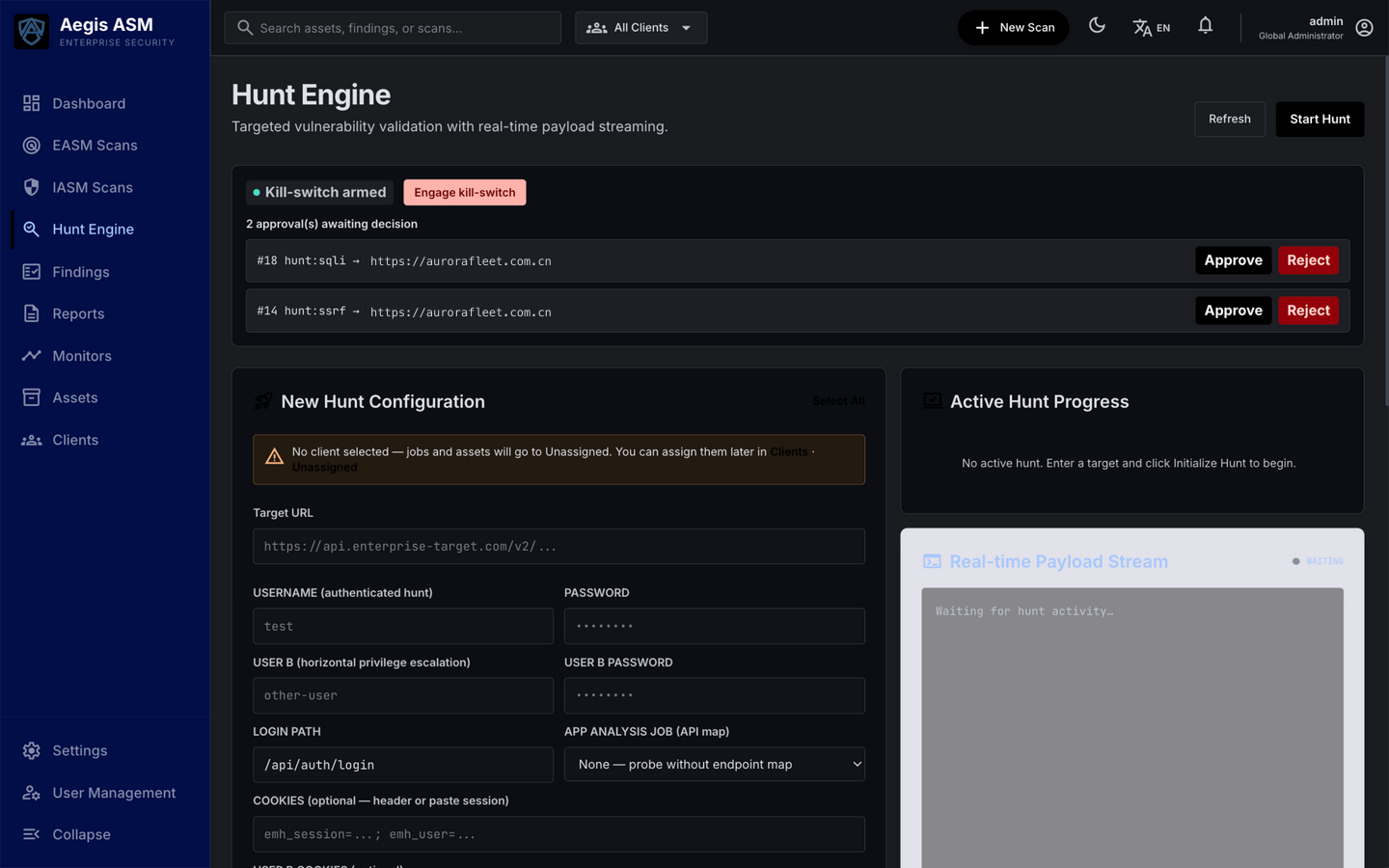
An LLM-driven targeted discovery engine that continuously hunts high-value targets and exploitable paths across the corporate exposure surface. It extends coverage to emerging AI-era attack surfaces such as MCP Servers and A2A Agents, and can fingerprint 11 categories of LLM engines.
Learn More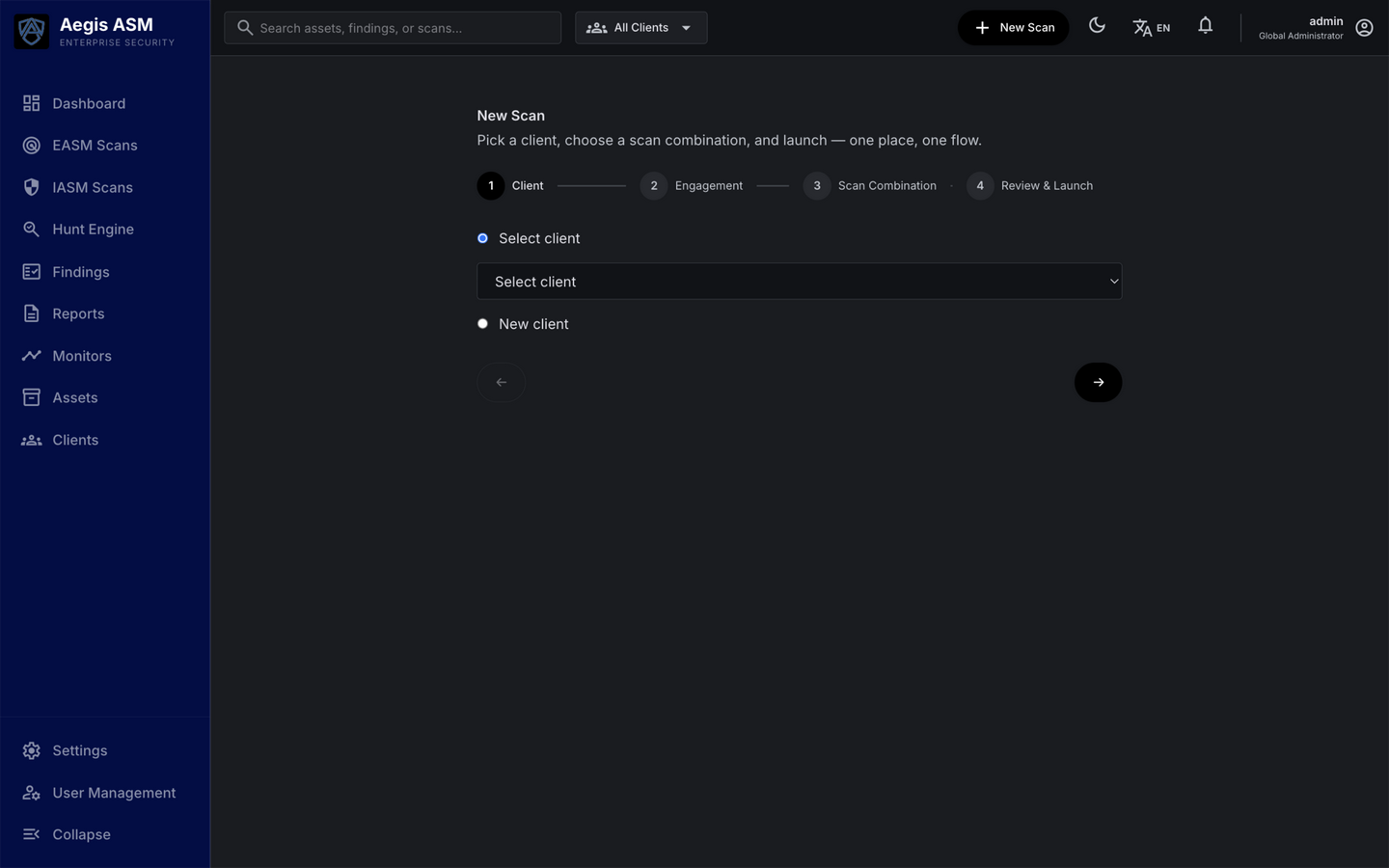
A guided wizard walks you through scope import, target selection, and policy configuration. Scan tasks are templated and dispatched, so every scan has clearly defined boundaries, time windows, and accountable owners.
Learn More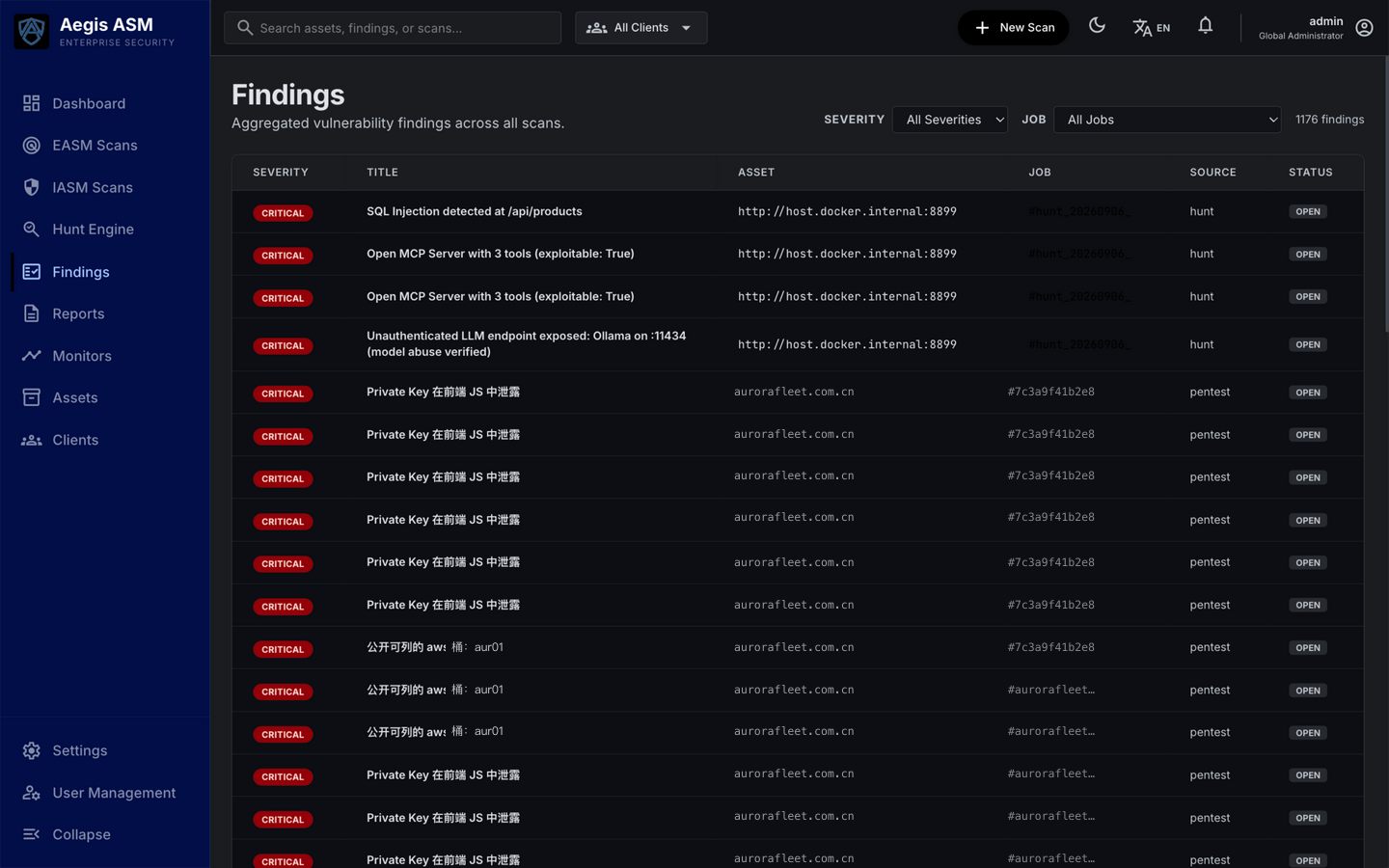
Scan results are consolidated by asset and risk type, with each finding annotated with details, reproduction steps, and impact description—delivering a clear worklist for manual verification and downstream remediation.
Learn More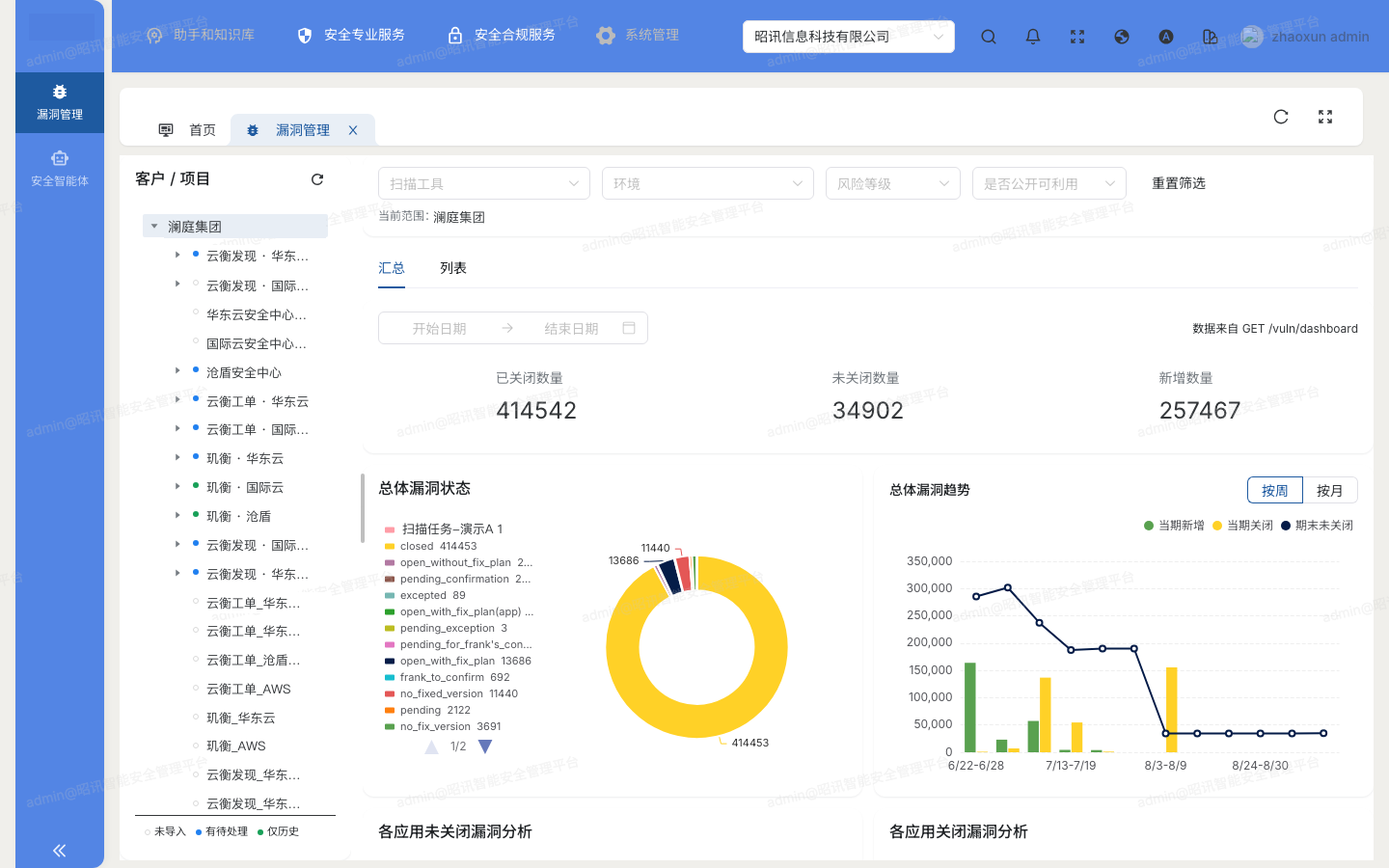
The intelligent security management platform handles vulnerability data at the million-record scale, automating validation, classification, and severity grading while generating reports with AI—giving risk remediation a solid evidence base.
Learn MoreService Workflow
Sign the testing engagement letter, define target assets, testing methods, and the execution window, and lock in the minimum-impact principle and emergency rollback plan.
Automated scans map the surface first; engineers then reproduce and grade each high-risk finding, with high-risk verification actions executed only after manual approval.
Reports are delivered tiered by High, Medium, and Low severity, explaining the root cause, reproduction path, and business impact of each risk—paired with actionable remediation plans.
After fixes are applied, a regression retest confirms risk closure and updates the asset risk baseline, which becomes the benchmark for the next testing cycle.
FAQ
Black-box simulates an external attacker using only public information—ideal for assessing internet-exposed surfaces. Gray-box provides partial credentials and documentation to mirror realistic insider-threat scenarios. White-box grants access to architecture and source code, enabling deep review of mission-critical systems. The three modes can be combined based on compliance requirements and risk priorities.
All testing is performed strictly within the scope and window formally agreed by both parties, typically scheduled during off-peak business hours. Verification is carried out in controlled environments and halted immediately at any sign of system impact. High-risk pentest operations additionally require online approval from the client before proceeding, minimizing disruption to business operations.
Reports are graded by High, Medium, and Low severity and include both an executive risk overview for leadership and detailed remediation items for technical teams. Each vulnerability entry provides specific fix steps and a priority recommendation. A report walkthrough can be arranged after delivery to help R&D and security teams align on remediation schedules.
The report serves as a pre-remediation risk self-assessment, helping you benchmark against the technical requirements of MLPS 2.0 and ISO 27001, identify gaps, and prioritize remediation—closing risks before formal assessment and reducing last-minute remediation pressure.
Scan tasks are orchestrated and dispatched in Aegis-ASM, while findings and verification outcomes flow into the intelligent security management platform to form a vulnerability ledger with trackable remediation progress. Findings accumulate across testing cycles, making risk trends easy to visualize.
Share your testing requirements and we will recommend scope, engagement model, and delivery cadence tailored to your asset footprint and compliance obligations.