
Solution · IT Infrastructure Services

Private Cloud Service Solutions

Custom-built enterprise private clouds powered by OpenStack and hyper-converged infrastructure. We cover domestic IT stack adaptation, backup and disaster recovery, and seamless scaling—so your mission-critical systems and sensitive data stay fully under your control while meeting industry regulatory requirements.

Solution Positioning

Data Stays In-House. Architecture Built to Grow.

When data localization becomes a clear regulatory mandate, when mission-critical systems demand strict continuity and performance, and when every movement of sensitive data must be auditable and traceable, "putting your resources on someone else's cloud" is no longer the default option. A private cloud brings compute, storage, and network resources back into your own environment—delivering the elasticity and automation of the cloud while keeping physical control over where your data lives, who accesses it, and how it is governed.

Private cloud service is the dedicated offering for "self-controlled infrastructure" within Zhaoxun's IT Infrastructure Services portfolio. We design and deploy tailored solutions on OpenStack and hyper-converged architecture, providing end-to-end coverage from requirements assessment and solution design through implementation, migration, acceptance, and ongoing operations. Every engagement is governed by the methodology of our ISO/IEC 27001:2022 Information Security Management System—embedding "secure and controllable" into both architecture design and engineering practice.

Three foundations of this solution

  • Data localization: Core data is stored in your on-premises data center or dedicated environment, satisfying the data residency requirements of regulators and internal governance.
  • Compliance and control: Security design is aligned with frameworks such as China's Multi-Level Protection Scheme 2.0 (MLPS 2.0), with permissions, operational audit, and operational boundaries defined by your organization.
  • Open evolution: Capacity planning is built on open architecture, enabling smooth scaling and upgrades without lock-in to a single technology path or vendor.

Choosing private cloud does not mean opposing public cloud. For workloads with clear elastic demand or external-facing services, we also deliver hybrid cloud networking that connects private and public environments—keeping sensitive data local while tapping into elastic capacity on demand, so compliance and efficiency never have to be a trade-off.
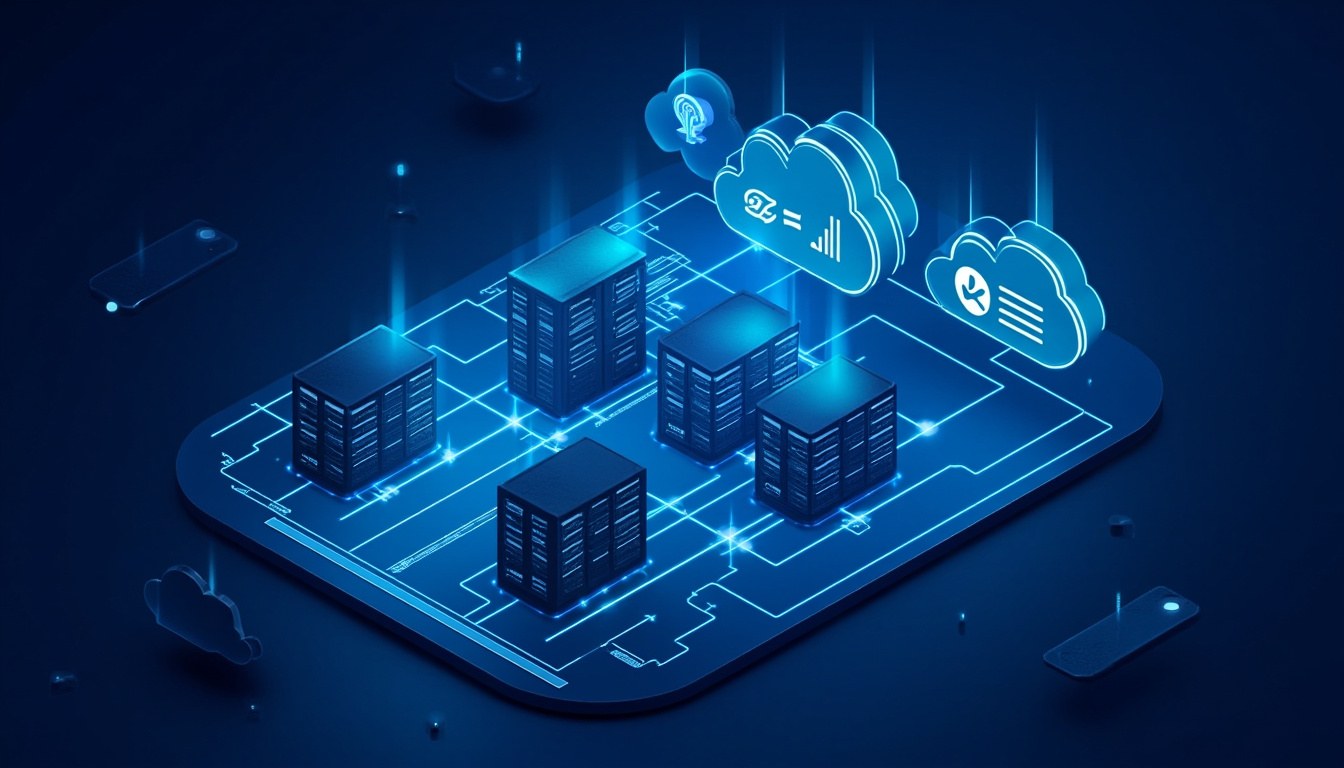
Private cloud platform and hybrid cloud network architecture illustration


Private cloud platform and hybrid cloud network architecture illustration

Selection Guide

Public Cloud or Private Cloud: It Depends on What Your Business Owns

Public Cloud

  • Data must remain on-premises—public cloud options fail compliance review
  • Generic cloud offerings struggle to interface with core production systems
  • Domestic IT stack adaptation lacks proven engineering validation
  • Backup and disaster recovery are nominal; recovery has never been rehearsed
Recommended for Mission-Critical Workloads

Private Cloud Service (This Solution)

  • On-premises data deployment that meets regulatory and industry requirements
  • Deep customization on OpenStack and hyper-converged architecture
  • Proven engineering track record on domestic IT stack adaptation
  • Local backup plus same-city and off-site disaster recovery, with rehearsed procedures

Service Scope

From Platform Build-Out to Continuous Evolution: A Complete Checklist

OpenStack Platform Build-Out

Build your private cloud on OpenStack with unified pooling and orchestration of compute, storage, and network resources. Delivers multi-tenant and self-service capabilities on an open architecture built for long-term evolution.

Hyper-Converged Architecture

Consolidate compute and storage through hyper-converged infrastructure to simplify cabling and day-to-day operations. Scale out by adding nodes as needed—ideal for the stable, reliable hosting of core production systems.

Domestic IT Stack Adaptation

End-to-end adaptation and validation across domestic hardware, operating systems, and cloud platforms—helping you advance your infrastructure autonomy roadmap with confidence.

Backup and Disaster Recovery

Build local backup systems for critical workloads, design same-city and off-site DR solutions, and extend your data protection perimeter to reduce the risk of business disruption from single points of failure or disaster scenarios.

Scaling and Upgrade Roadmap

Plan capacity in line with business growth and define smooth scaling and upgrade paths—so your private cloud evolves with the business and avoids one-off investments that lock you in.

Hybrid Cloud Networking

Design interconnectivity, policy handoff, and traffic orchestration between private and public clouds for elastic and external-facing workloads—so the two environments work together rather than in silos.

Domestic IT Stack Adaptation: Layer-by-Layer Validation for a Smooth Transition

Adaptation is more than just "it installs." We validate compatibility and performance at every layer—from hardware through applications—before moving into migration and rollout, keeping business risk under control throughout your autonomy journey.

LayerScope of WorkDeliverables
Hardware LayerVendor and model selection, validation, and compatibility testing for domestic servers and appliancesSelection recommendations and compatibility validation report
Operating System LayerDeployment, tuning, and security hardening of domestic operating systemsStandardized system templates and hardening baseline
Database & Middleware LayerMigration, adaptation, and parameter tuning for databases and middleware on domestic platformsMigration plan and regression validation log
Cloud Platform LayerIntegration validation for OpenStack running on domestic hardware and softwarePlatform adaptation matrix and deployment specification
Application LayerCompatibility assessment and joint debugging for core business systemsRefit assessment conclusions and implementation recommendations

Delivery Process

Five Steps: From Requirements Assessment to Ongoing Operations

Requirements Assessment

Map your business systems, data assets, and existing infrastructure. Clarify data localization, compliance, and performance requirements, and deliver an assessment with feasibility conclusions.

Solution Design

Finalize architecture choices across OpenStack and hyper-converged infrastructure, complete capacity planning and network design, and embed security design aligned with MLPS 2.0 to produce an actionable build-out plan.

Deployment & Implementation

Complete customized deployment and integrated commissioning in your data center. Bring workloads online in batches under formal change management, and deliver the supporting configuration documentation and operations manual.

Migration & Acceptance

Define migration windows and rollback plans for core production systems and data. Validate functional, performance, and disaster recovery outcomes through rehearsal before formal acceptance and handover.

Ongoing Operations

Provide 7×24 operations support and regular health checks, continuously track capacity headroom and platform health, and execute scaling and upgrades along the agreed roadmap.

Integrated Build-Out: From Data Center to Cloud Platform

Integrated Build-Out: From Data Center to Cloud Platform

Private cloud is more than a software install. We assess your data center power, cooling, and network conditions alongside the platform—so infrastructure and platform are planned and delivered in one pass, avoiding the rework of "build the platform first, fix the data center later."

Architecture and Capacity Designed for Evolution

Architecture and Capacity Designed for Evolution

Architecture is built around resource pooling and horizontal scale-out, with clear headroom for future node expansion and platform upgrades—so every investment serves long-term capability building.

Frequently Asked Questions

Key Questions Before You Decide

What is the typical timeline and pacing for a private cloud build-out?

The timeline depends on your data center conditions, platform scale, and the complexity of systems to migrate. During the requirements phase we deliver a phased plan with clear milestones: we first onboard non-critical workloads to validate the platform, then migrate core production systems in an orderly way—so business continuity is never put at risk.

We already have workloads on public cloud. Can we still build a private cloud?

Yes—private and public cloud are not an either/or choice. We can design a hybrid cloud networking plan that keeps core production systems and sensitive data on the private cloud while elastic and external-facing workloads continue to run on public cloud, with unified governance across network and security policies.

Will domestic IT stack adaptation affect our business systems?

We follow a "validate first, migrate later" principle. Compatibility and performance are validated layer by layer—from hardware, operating systems, and databases through the cloud platform—before application migration and refit plans are finalized. This keeps business systems out of uncontrolled risk during adaptation.

How are backup and disaster recovery designed?

Data protection is designed by business criticality. For key systems we combine local backup with same-city or off-site disaster recovery to extend the protection perimeter, and we verify effectiveness through regular recovery drills—so data is recoverable and business can be taken over in a disaster scenario.

Who runs the platform after go-live?

We provide 7×24 operations support and regular health checks. We can also work in a joint operations model tailored to your in-house team's maturity—keeping the platform stable while helping you gradually build up your own private cloud operations capability.

Put Your Critical Data on a Cloud You Control

Share your business scenario and current infrastructure, and a Zhaoxun architect will work with you on requirements assessment—delivering a private cloud design proposal with a practical implementation path.