
Today's Highlights
The clearest signal today is that cybersecurity consolidation and cloud identity risk are rising in parallel, requiring enterprises to move from point deployments to unified exposure management. Capital concentration is increasing buyers' expectations for platform consolidation, while exploited identity and cloud platform vulnerabilities show that control is spreading beyond endpoints into tenant environments, keys, and third-party hosted environments.
Market Trends: Security Consolidation and Energy Constraints Advance in Parallel
CrowdStrike's talks to acquire Zscaler suggest that cybersecurity budgets may concentrate further on a small number of platforms. Buyers should assess contract consolidation, service continuity, and exit strategies in advance. AI data centers competing for reliable power are extending the compute race into gas pricing and grid peak balancing; when evaluating model costs, enterprises should incorporate power and capacity assurance into long-term costs.
Industry Focus: Commercial Visual Design Enters the Generative Design Phase
Kling Image 4.0 enables models to contribute to design proposals, shifting image tools from asset generation to poster and advertising layouts. BizGenEval used 400 prompts and 8000 assessment questions to test leading models, showing that precise layouts and object attribute alignment still fall short. Marketing and content teams can run limited pilots, but acceptance testing must cover text accuracy and selective editing.
AI Update: Embodied Capability Emerges as a New Comparison Dimension
GPT-6.2 Astra doubled the success rate of GPT-6 Astra across 16 tasks and achieved the world's first successful completion of deformable-object manipulation, showing that model competition is extending into complex physical environments. Enterprises evaluating robotics or automation solutions should include real-world success rates, exception handling, and deployment costs in acceptance criteria, rather than relying solely on general benchmarks in place of business pilots.
Security Posture: Identity and Managed Cloud Become Attack Surfaces
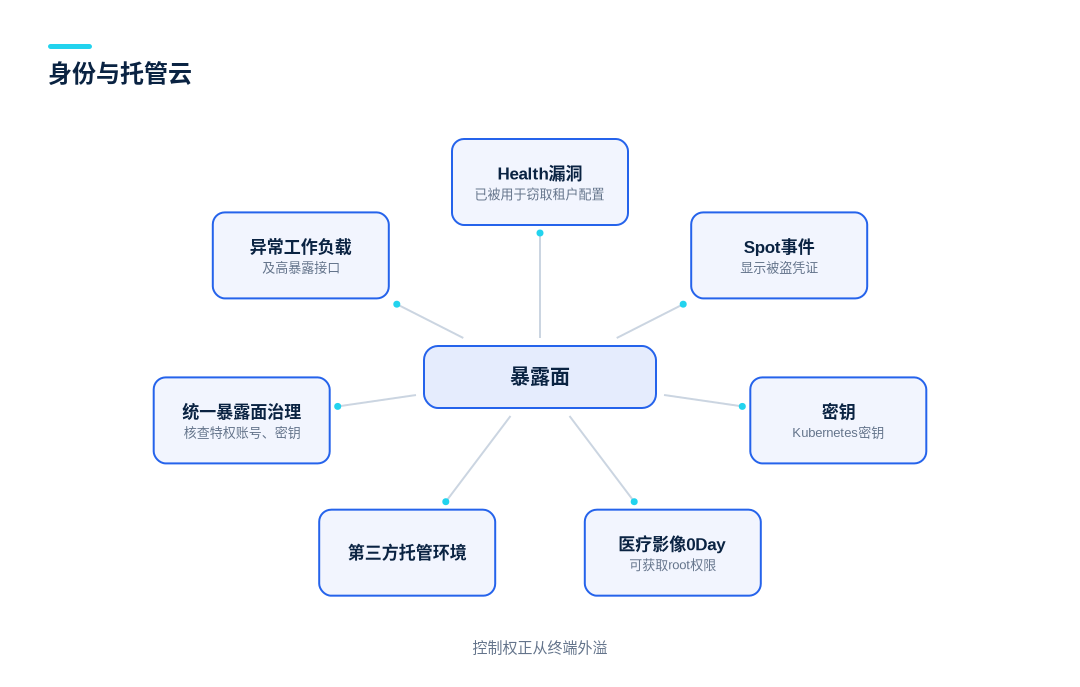
An Entra Connect Health vulnerability has been exploited to steal tenant configurations, while the Rackspace Spot incident shows that stolen credentials can lead to Kubernetes keys. A medical imaging 0Day has demonstrated that an AI Agent can obtain root access, with no official fixed version currently available. Enterprises should review privileged accounts, keys, anomalous workloads, and high-exposure interfaces, and validate recovery times.
Key Figures Today
At a Glance
- Today's Picks
- 8Stories
- Theme Groups
- 3Groups
- Sources Covered
- 6Sources
- Organizations taking more than six weeks to resume operations
- 28%
Market and Industry Insights
CrowdStrike in Talks to Acquire Zscaler
CrowdStrike is in talks to acquire Zscaler. If completed, the deal could rank among the largest cybersecurity acquisitions in history, although negotiations remain uncertain. Greater platform concentration may follow, requiring customers to assess contract consolidation, data migration, service continuity, and vendor exit arrangements earlier.
Major consolidation could reshape security procurement. Review contract continuity and multi-vendor exit plans early.
Data Center Competition for Reliable Power Reshapes AI Costs
TGOOD and LG are entering the race for AI power resources, with competition for electricity extending all the way to gas fields. Data centers' demand for reliable power is reshaping U.S. gas-fired power pricing and grid peak balancing, with advanced gas-power operations holding a 69% market share. China's “East Data, West Computing” peak-shaving economics must also be recalculated, although order execution remains uncertain.
AI infrastructure costs now extend to power and capacity assurance. Include peak and off-peak energy costs in long-term budgets.
AI Updates
GPT-6.2 Astra Advances Embodied Model Performance
QbitAI reports that GPT-6.2 Astra doubled its success rate compared with GPT-6 Astra across 16 tasks and achieved the world's first successful completion of deformable-object manipulation. The advance shows model capabilities expanding from general tasks to embodied control, so enterprises adopting robotics solutions should add real-world success rates and exception handling to acceptance testing.
When evaluating embodied models, focus acceptance testing on real-task success and exception handling; see AI Radar for current pricing and plan comparisons.
Kling Image 4.0 Advances Commercial Visual Design
Kling Image 4.0 now produces design proposals on its own, taking commercial image tools from asset generation to poster and advertising layout design. BizGenEval tested leading models with 400 prompts and 8000 assessment questions, showing that precise layouts and attribute alignment across multiple objects remain weak points.
Commercial content teams can start with low-risk pilots, but should validate text accuracy, layout quality, and selective editing before launch.
Security Incidents
Microsoft Entra Vulnerability Exploited in Attacks
Microsoft disclosed that attackers exploited a vulnerability in the Entra Connect Health service to exfiltrate data, gaining unauthorized access to administrator email addresses and tenant configuration information. The issue lies in the identity and cloud management chain. Enterprises should verify whether the service is in use, review relevant administrator accounts and access logs, and validate remediation once official guidance is released.
If identity and cloud management services fall, attackers may gain entry to continue configuring tenants. Review privileged accounts and access logs first.
AI Agent Uncovers Medical Imaging 0Day
Attackers used an AI Agent to discover a 0Day vulnerability in open-source medical imaging software, enabling unauthorized root access to the server. The vulnerability has a CVSS score of 9.8, and no official fixed version is currently available, creating a direct risk combination between AI-assisted vulnerability discovery and high-privilege intrusion.
High-risk systems without patches should immediately isolate administrative interfaces and inventory their exposure, while teams track the official fixed release.
Rackspace Customer Kubernetes Keys Accessed
Rackspace warned that attackers used stolen credentials to breach the Rackspace Spot cloud platform, deploy unauthorized workloads, and access Kubernetes keys in customer clusters. The incident highlights risks across credentials, workload controls, and key protection. Affected customers should confirm anomalous activity and rotate relevant credentials.
Organizations using managed Kubernetes environments should inspect anomalous workloads, key access, and credential reuse.
Rubrik Says Ransomware Recovery Can Take Six Weeks
Rubrik research shows that 28% of organizations took more than six weeks to resume operations after ransomware attacks. The data indicates that recovery periods may significantly exceed business expectations. Having backups does not guarantee timely recovery; enterprises should incorporate actual recovery times into contingency plans and exercises.
Validate recovery capabilities against acceptable business downtime rather than treating “backup completed” as a substitute for real recovery exercises.
Follow Zhaoxun
Receive daily updates on the latest developments in AI and Information Security. Contact us for your security implementation needs.