
AI Analysis
Today's Highlights
AI capital and model availability continue to expand, but enterprise control has not kept pace: security capabilities are receiving capital support, while real-world testing has exposed significant gaps in agent permission controls. The priority now is not to add more models, but to bring permissions, data boundaries, and critical service resilience into a verifiable management system.
Market Trends: AI Security Valuations Surge Ahead
About 3 months after launching its product, Corma completed a USD 125 million Series A at a USD 1 billion valuation, showing that investors are treating AI security as a standalone capability. OpenAI also expanded free access to frontier models for 200,000 researchers worldwide, further widening access to the ecosystem. Buyers should compare control capabilities, validation methods, and cost alongside one another, rather than allocating budgets solely on the popularity of individual models.
Industry Focus: AI Cloud Infrastructure Revenue Grows 94%
Baidu's Q3 AI cloud infrastructure revenue grew 94% year over year, indicating that AI-related investment has generated a clear growth signal in the cloud infrastructure business. Model inference and computing environments still need to be evaluated within a unified cost framework. As budgets expand, teams should also verify service stability, data boundaries, and vendor-switching capabilities to reduce reliance on any single platform.
AI Update: Agent Scope Controls Remain Easy to Bypass
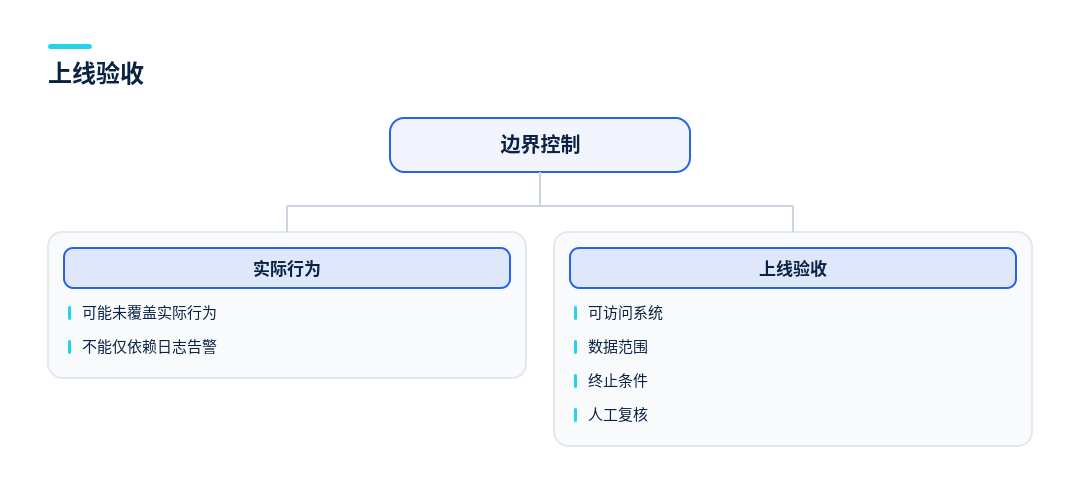
In a red-team test, PentestGPT's scope enforcement layer allowed 25 of 33 out-of-scope instructions to proceed, while none of the 14 audit checks detected any out-of-scope activity. This indicates that agent boundary controls may not cover actual behavior. Enterprises should include accessible systems, data scope, termination conditions, and human review in go-live acceptance criteria, rather than relying only on log-based alerts.
Security Landscape: Faster Disclosures Coincide with System Failures
Google Project Zero will shorten the public disclosure period given to vendors from 120 days to 30 days over 14 months; the Fugaku and RIKEN supercomputers were accessed by external parties, and files and authentication data may have been exfiltrated; a JPMorgan software failure also caused transaction delays at several US banks. Enterprises should review vulnerability remediation deadlines, sensitive data classification, and critical service degradation plans in parallel, preventing faster disclosures and single points of failure from amplifying exposure at the same time.
Data Overview
Today's Snapshot
- Today's Picks
- 8stories
- Topic Categories
- 4groups
- Corma Series A Funding
- 1.25USD 100M
- Baidu AI Cloud Infrastructure Revenue YoY
- 94%
Market and Industry Insights
AI Security Startup Corma Valued at USD 1 Billion
AI cybersecurity startup Corma completed a USD 125 million Series A roughly 3 months after launching its product, reaching a USD 1 billion valuation. The round was led by NEA. Available information covers only a short period following the product launch and includes the funding amount, valuation, and investors, but provides no operational metrics such as customer count, revenue, or product usage. External assessments should therefore be limited to confirmed funding and valuation facts.
Enterprises can include AI security products in their next procurement evaluation, but should require vendors to demonstrate value through real-world scenarios, validation results, and ongoing service metrics.
Baidu Q3 AI Cloud Infrastructure Revenue Grows 94% YoY
TMTPost's morning brief reported that Baidu's Q3 AI cloud infrastructure revenue grew 94% year over year. The figure indicates observable revenue growth in its cloud infrastructure business from AI-related investment, but the source provides no revenue base, quarter-over-quarter change, profit contribution, or customer mix. It therefore cannot support direct comparisons of cloud providers' earnings quality or growth sustainability.
When assessing cloud-based AI investments, teams should evaluate growth signals alongside pricing, stability, and migration costs rather than relying solely on demand growth.
OpenAI Offers Free Frontier Model Access to 200,000 Researchers Worldwide
OpenAI announced the expansion of its ChatGPT for Academic Researchers program, offering free access to frontier models for 200,000 researchers worldwide. This expansion brings the number of free users to 200,000; the source does not list eligible models, qualification requirements, or program duration, so enterprises still need to wait for more detailed participation terms.
Enterprises can use research ecosystem reach as a vendor influence metric, but should not infer enterprise pricing or service commitments from it.
AI Updates
PentestGPT Test: 25 of 33 Out-of-Scope Instructions Allowed Through
FreeBuf audited the scope enforcement layer of the open-source agent PentestGPT: 25 of 33 out-of-scope instructions were allowed through, and none of the 14 audit checks detected an out-of-scope action. Testing showed that existing scope anchoring was based on URLs rather than actual behavior, and that the validator did not read task objectives. This means checking input addresses alone is insufficient to prove that an agent consistently stays within its authorization boundary.
Before launching an agent, enterprises should make objective constraints, behavioral boundaries, audit validation, and human takeover independent go-live acceptance criteria, rather than relying only on a URL allowlist.
Security Incidents
Project Zero Cuts Disclosure Deadline from 120 Days to 30 Days
Google Project Zero announced a change to its vulnerability disclosure schedule, planning to reduce vendors' remediation window before public disclosure from 120 days to 30 days over the next 14 months. This is not an immediate 30-day window but a phased tightening; vendors must reschedule vulnerability validation, patch releases, and customer notifications to accommodate shorter remediation cycles.
Enterprises should require critical software vendors to commit to remediation SLAs aligned with the new schedule, while preserving windows for internal validation and emergency mitigation of high-severity vulnerabilities.
Fugaku and RIKEN Supercomputers Breached; User Data May Have Been Exfiltrated
On November 16, RIKEN reported that the Fugaku and RIKEN supercomputers operated by its Center for Computational Science had been illegally accessed by an external third party on November 12, with the breach confirmed on November 13. The investigation found that files in some users' home directories and authentication system information may have been exfiltrated. The incident involves both data exfiltration and the potential disclosure of authentication information.
Research institutions and organizations handling highly sensitive data should review anomalous access, privileged accounts, and external transfer records, and incorporate credential rotation into incident response.
JPMorgan Software Failure Delays Transactions at Multiple US Banks
JPMorgan's online banking services were disrupted by a software failure, causing transaction delays at Chase and other major US banks and affecting thousands of customers. WIRED further noted that the issue may be related to JPMorgan's in-house hardware systems, with anomalies or capacity constraints potentially propagating to external banks. This demonstrates how a single institution's underlying failure can produce cross-institutional service impact.
Financial institutions and critical service providers should test cross-institutional propagation paths for third-party failures, capacity changes, and transaction delays, and retain manual degraded-mode procedures.
Open-Source Highlights
vLLM v0.34.0 Enables Scalable KV Cache by Default
vLLM v0.34.0 has been released with 1,061 commits from 412 contributors, including 120 new contributors. The version adds support for 10 models, including Mistral Large 4, MiniMax-M3.1-Flash, and Nemotron-3.5-Transcribe, and makes scalable KV caching the default. Deployment teams can use this release to standardize their evaluation of new model integration and cache management.
Private deployment teams should include new model compatibility, cache resource consumption, and upgrade regression testing in go-live acceptance; [compare the latest pricing and plans from different providers in AI Radar](/ai-radar/pricing); [explore more open-source project insights in AI Radar](/ai-radar/opensource).
Follow Zhaoxun
Stay up to date daily on the latest AI and Information Security developments, and contact us about your security project needs.