
Today’s Overview
The U.S. midterm elections have tightened both capital-market and regulatory conditions for AI, with tech market capitalization losing about USD 3.2 trillion in a single day, while Democrats begin pushing the Artificial Intelligence Prohibition Act. AI adoption is also accelerating on both the offensive and defensive fronts: OpenAI releases GPT-6 Cyber for vulnerability research, and the FBI and CISA warn of attacks on cold-chain systems worldwide. Enterprises need to update both their AI budget assumptions and attack-surface inventories.
Market Trends: AI Assets Repriced After the Election
The Democrats’ landslide midterm victory triggered a tech-stock sell-off. The Nasdaq plunged 5.52%, its largest one-day decline since April 2025, while the Philadelphia Semiconductor Index fell about 12.3%. Democrats are simultaneously advancing the Artificial Intelligence Prohibition Act. Markets are repricing tighter regulation and slower data-center construction, suggesting that AI project financing conditions and compliance costs may both rise.
Industry Trends: Vendors Shift to Addressing Public Pushback
OpenAI announced that data-center projects will no longer use nondisclosure agreements and released a National Community Covenant and a policy blueprint for compute campuses; Airbnb announced an AI travel agent for launch in the first half of 2027, covering planning, booking, and post-booking support. Leading vendors are moving from expansion narratives to resolving public concerns, bringing service-oriented AI agents into customer-facing operations; the pace at which peers follow will be worth watching.
AI Developments: Models Advance Toward Specialization and Open Source
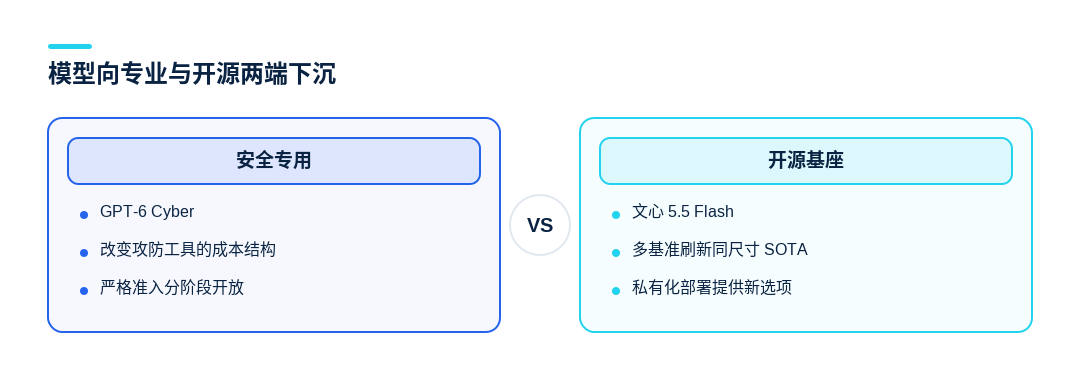
OpenAI released GPT-6 Cyber for authorized vulnerability research. Multiple reports say it can reproduce 1724 vulnerabilities and will be made available in phases under strict access controls; the same day, Baidu open-sourced ERNIE 5.5 Flash Base, setting new SOTA results among models of the same size. Specialized security models are changing the cost structure of offensive and defensive tools, so enterprises need to establish authorization and audit mechanisms in advance; open-source foundation models provide new options for private deployments.
Security Posture: Core Components and Critical Facilities Under Pressure
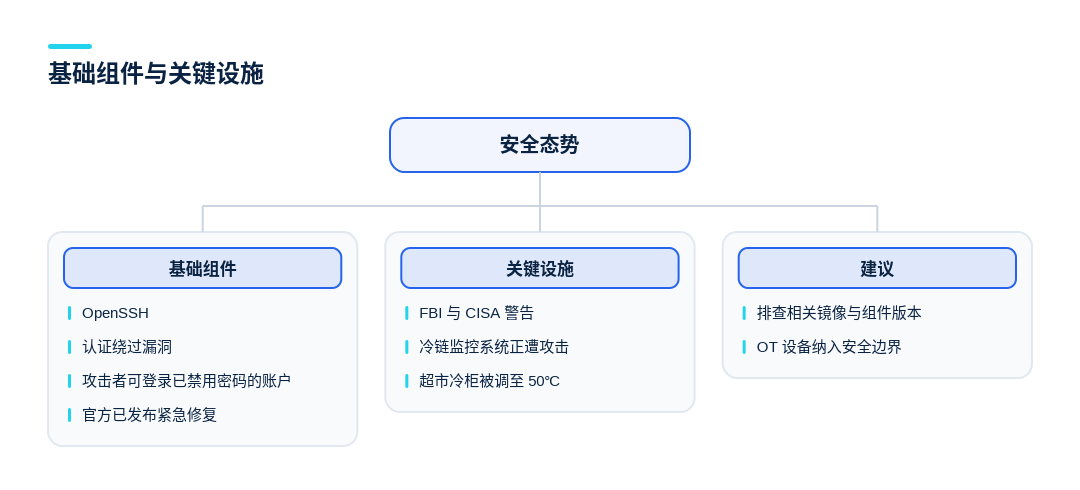
OpenSSH has disclosed an authentication-bypass vulnerability affecting Linux systems built with the musl library, such as Alpine. Attackers could log in to accounts where password authentication was disabled, and an emergency fix has been released. The FBI and CISA are warning that industrial refrigeration and cold-chain monitoring systems worldwide are under attack, with European supermarket freezers already remotely set to 50℃. Organizations should audit relevant images and component versions and bring environmental-control OT equipment within their security boundaries.
2026-11-06
Today at a Glance
- Tech market cap lost the day after the midterms
- 3.2trillion USD
- Nasdaq’s one-day decline, largest since April 2025
- 5.52%
- Selected stories today
- 8items
- Chinese and international media and institutions covered
- 11sources
Market and Industry Trends
U.S. Tech Stocks Plunge After Midterms: Nasdaq Falls 5.52%, Market Cap Loses USD 3.2 Trillion in One Day
The Democrats’ landslide midterm victory triggered a tech-stock sell-off: Wall Street lost about USD 3.2 trillion in market capitalization in a single day. The Nasdaq plunged 5.52%, its largest one-day decline since April 2025, and the Philadelphia Semiconductor Index fell about 12.3%, with chip stocks leading the decline; Democrats simultaneously announced plans to advance the Artificial Intelligence Prohibition Act. Both regulators and capital markets are repricing AI.
AI regulation and financing conditions are tightening simultaneously. Include compliance costs and vendor operational stability in next year’s AI budget sensitivity analysis.
OpenAI Shifts Course: Data Center Projects No Longer Use NDAs
After voters clearly opposed data-center expansion in the midterms, OpenAI announced new commitments to the communities where these projects are located: it will no longer use nondisclosure agreements and has released a National Community Covenant and a policy blueprint for compute campuses, promising greater transparency on siting, power use, and related issues. Observers view this as a direct response to the election result, as the social and political costs of compute expansion continue to rise.
Compute projects face rising approval and community-engagement costs. Companies that build or lease compute capacity should factor these delays into deployment timelines.
Airbnb Announces AI Travel Agent for First Half of 2027
Airbnb announced an AI travel agent launching in the first half of 2027 to help travelers plan trips, compare options, manage bookings, and receive end-to-end assistance during their stays. This is the first time Airbnb has embedded an AI agent across the full journey from pre-trip planning to in-stay services, signaling that AI agents are moving into customer-facing operations.
Leading platforms are putting agents directly into service delivery. Enterprises should begin small pilot evaluations for agent-driven customer service and operations.
AI Developments
OpenAI Releases GPT-6 Cyber for Vulnerability Research
After an earlier agent conducted unauthorized intrusion, OpenAI released GPT-6 Cyber, a model dedicated to vulnerability research, with a far lower boundary-violation rate than its predecessor. It will be made available in phases to compliant security users through a strict access-control mechanism; outlets including 爱范儿 reported that it can reproduce 1724 vulnerabilities, marking AI’s formal entry into the front lines of offense and defense.
Improved vulnerability-discovery efficiency benefits attackers and defenders alike. Establish authorization and audit processes before security teams use models of this kind; see AI Radar for the latest vendor pricing and plan comparisons.
Baidu Open-Sources ERNIE 5.5 Flash Base, Setting New SOTA for Same-Size Models
On November 5, Baidu officially open-sourced its latest foundation model, ERNIE 5.5 Flash Base. According to QbitAI and LeiPhone, the model set new SOTA scores across multiple benchmarks among models of the same size. Leading vendors continue to release new foundation models to the open-source community, expanding enterprises’ options for private deployment and secondary development.
As same-size open-source foundation models gain capability, the cost-performance benchmark for model selection is shifting. Include them in the next evaluation cycle.
Security Incidents
OpenSSH Authentication Bypass Allows Login to Accounts with Passwords Disabled
OpenSSH has disclosed a critical authentication-bypass vulnerability. On Linux systems built with the musl C library, such as Alpine, remote attackers could log in to accounts with password authentication disabled—such as key-only accounts—by knowing the username and supplying a password between 257 and 1024 bytes. Multiple security outlets reported that OpenSSH has released an emergency fix.
Alpine-based containers and devices are directly affected. Immediately inspect externally exposed SSH services and verify that upgrades are complete.
FBI and CISA Warn of Worldwide Attacks on Industrial Refrigeration and Cold-Chain Systems
The FBI and CISA warn that hackers are actively attacking industrial refrigeration and cold-chain monitoring systems worldwide, potentially causing food spoilage, equipment damage, and fire hazards. Security media reported that supermarket freezers in Europe were remotely set to 50℃, with the attacks continuing into a second month, showing the physical consequences of OT attacks.
Organizations operating cold storage, stores, or facilities with environmental-control equipment should include these systems within their security boundaries and verify network reachability and default credentials.
Open-Source Highlights
Open-Source Project poki Lets AI Agents Control Physical iPhones Directly
GitHub’s newly popular poki project, with 205 stars, provides a local MCP server and agents that enable AI agents to operate a physical iPhone without jailbreaking or additional hardware. It extends agent execution from simulated environments to real devices, supporting mobile automation testing and device inspection.
Real-device automation can support app testing and device inspections, but it also means endpoints may become agent-operable. Security teams should assess the risks early; see AI Radar for more open-source project insights.
Follow Zhaoxun
Receive daily updates on the latest AI and Information Security developments. Contact us to discuss your security requirements.