
AI Analysis
Today's Briefing
Today's signals show that AI commercialization is shifting toward regional access, engineering implementation, and verifiable identity; meanwhile, critical software update chains and AI agent platforms are successively exposing high-impact risks. Enterprises should capture deployable intelligent capabilities while prioritizing defenses against supply chain, authentication bypass, and endpoint trust risks.
Market Trends: Regional Deployment Driven by Compliance
Apple Intelligence in mainland China has started developer testing and integrated Qwen, with the official release planned for December; SK hynix's roughly US$45 billion New York expansion plan has been stalled because equipment export licenses have not yet been approved. This shows that model localization and chip expansion are both constrained by policy and supply chains. Procurement assessments should also include compliant sourcing, regional availability, and delivery continuity.
Industry Spotlight: Embodied AI Moves Toward Real-World Tasks
An embodied AI company has completed nearly US$100 million in financing, aiming to enable robots to act autonomously in open, dynamic real-world environments. The article notes that over the past two years humanoid robots could mostly perform choreographed actions such as dancing, flipping, and playing the piano, but many demonstrations were still in closed environments. Capital's focus shifting to open environments means enterprise pilots should move from pre-choreographed demos to validating real-task stability and exception handling.
AI Updates: Identity Verification and Orchestration Guardrails Advance Together
Anthropic is developing FlashProve to let anyone verify whether an AI response actually comes from the model it claims; the open-source project skein constrains agent clusters through task isolation and rejection of stale results. This means enterprise procurement is moving from asking whether features work to asking whether identity can be verified and processes controlled. When agents enter critical workflows, provenance proof, call logging, and exception handling should be written into acceptance criteria.
Security Landscape: Software Trust Chain Faces Dual Shock
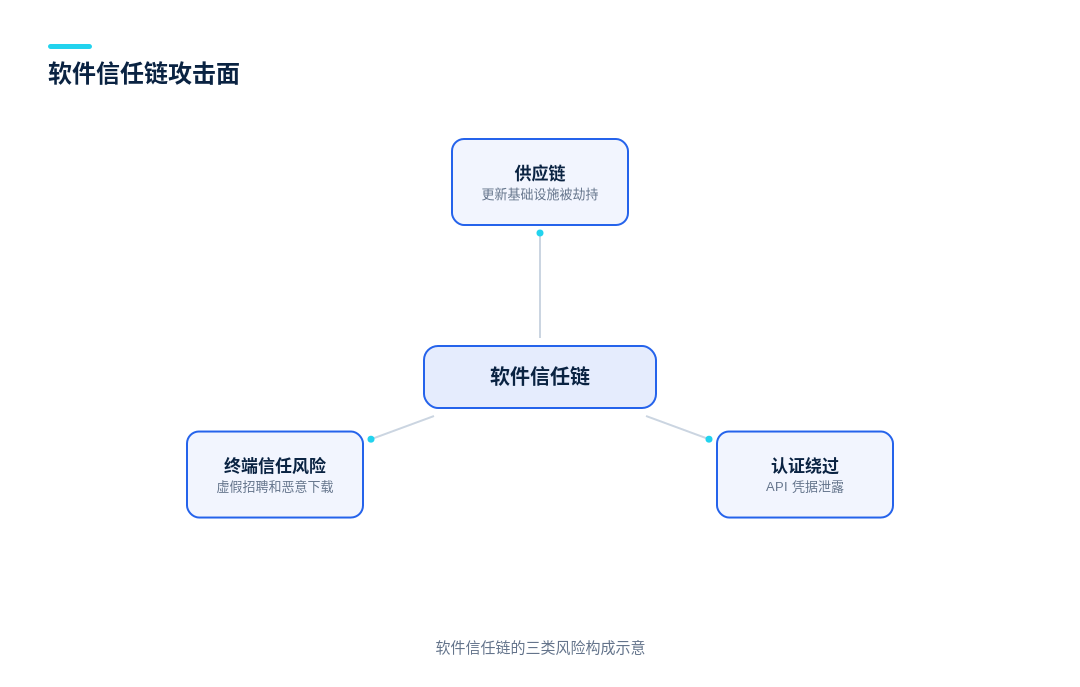
The severe Langflow vulnerability can lead to authentication bypass, API credential leakage, and remote code execution, and IBM has patched it; cPGuard's update infrastructure was hijacked to distribute backdoors and data-theft scripts. The US$6.34 billion theft disclosed by Binance also used fake recruiting and malicious downloads to penetrate endpoints. Beyond patching vulnerabilities, enterprises must review agent frameworks, update signatures, and vendor access.
Key Metrics
Today at a Glance
- Today's Highlights
- 8items
- Topic Groups
- 4groups
- Sources Covered
- 7sources
- Binance Disclosed Amount
- 6.34billion
Market & Industry Watch
Apple Intelligence in Mainland China Starts Testing with Qwen Integration
Apple has released the first iOS 27.3 beta to developers, and iPhone users in mainland China have begun testing initial Apple Intelligence features such as Live Translation, photo clean-up, Writing Tools, and Notification Summaries. Apple has partnered with Alibaba to integrate Qwen into some experiences, covering text and image understanding in Siri, Writing Tools, and Visual Intelligence; the official release is planned for December.
Enterprises in mainland China can use this to assess the scope of Apple Intelligence availability in advance, but rollout plans should wait for the official release and validate how partner features such as Qwen perform in practice. For the latest pricing and plan comparisons, see AI Radar.
SK hynix's US$45 Billion New York Plant Plan Hits Roadblock
According to Reuters on November 3, citing people familiar with the matter, SK hynix plans to invest about US$45 billion in two NAND flash plants in New York State, but the expansion has encountered new obstacles. The US Commerce Department has not yet approved a license for the company to export more US-made semiconductor equipment to its Dalian plant in China. The company hopes to generate additional revenue by expanding capacity at its Chinese plant to help fund construction of the new New York plant.
Enterprises that depend on capacity or equipment from a single region should assess alternative supply, licensing changes, and delivery timelines in advance to avoid expansion shifts becoming procurement and inventory risks.
Embodied AI Team Raises Nearly US$100 Million
Geek Park reports that an embodied AI team, after raising nearly US$100 million, is advancing an “action partner” for open, dynamic real-world environments. The article notes that over the past two years humanoid robots could mostly perform choreographed actions such as dancing, flipping, and playing the piano, but many demonstrations were still in controlled, closed environments; capital and product focus is shifting toward robots' perception, judgment, and adjustment capabilities in real open environments.
Embodied AI pilots should include open-environment stability, exception handling, and ongoing operating conditions in acceptance criteria, rather than substituting pre-choreographed demos for business feasibility judgment.
AI Updates
FlashProve Explores AI Model Identity Proof
TechCrunch reports that Anthropic is developing a system called FlashProve to prove the identity of AI models: anyone can check whether an AI response actually comes from the model it claims. The project treats provenance authenticity and verifiability as a standalone capability, but the materials do not disclose a launch date, model coverage, or specific verification mechanism.
When procuring external models, enterprises should not only evaluate performance but also retain auditable provenance and invocation records, and include model identity verification in acceptance criteria for high-risk scenarios.
Security Incidents
Binance Discloses US$6.34 Billion Theft
WIRED Security, citing Binance, reports that suspected North Korean hackers first lured engineers into downloading malware through fake job interviews, then entered cryptocurrency company systems and stole assets, with the incident reaching US$6.34 billion. Binance says the attackers used tactics that were not novel, but the available material focuses on their intrusion path and successful outcome.
Enterprises should include recruitment-related attachments and downloads in endpoint detection and permission audits, and high-value business systems should restrict executable file sources and anomalous account access.
cPGuard Update Infrastructure Hijacked
BleepingComputer reports that hackers have hijacked the automatic update infrastructure of the cPGuard web security suite and used the compromised update channel to distribute backdoors and data-theft scripts. The attack targets the software update chain rather than an isolated intrusion at a single deployment point, aiming to enter environments through customers' normal update behavior.
Enterprises should immediately verify cPGuard update sources, signatures, and distribution records, investigate anomalous endpoint updates, and include security products' own update chains in supply chain monitoring.
Severe Langflow Flaw Can Bypass Authentication and Execute Code
CSO Online reports that IBM has patched multiple severe vulnerabilities in Langflow. Langflow is an open-source framework for building AI agents, LLM workflows, and RAG systems; these flaws could allow attackers to bypass authentication, leak API credentials, and execute arbitrary code. IBM has taken patching measures, but the material does not specify the affected version range.
Enterprises using Langflow to build internal agents should check versions and upgrade as soon as possible, review authentication configurations, reduce management interface exposure, and assess whether API credentials need rotation.
Open-Source Spotlight
skein Uses Fail-Closed Mechanism to Constrain Agent Clusters
A newly high-starred GitHub repository shows that Balanov/skein is a Go-based agent orchestration project with 261 stars. It is positioned as fail-closed orchestration, isolating work through epoch fencing and rejecting completion results that arrive too late; the available material does not disclose production adoption scale, performance benchmarks, or stability data.
When evaluating multi-agent collaboration, enterprises can focus on task isolation, rejection of stale results, and failure handling mechanisms, but should not include projects in production procurement based on popularity alone. For more open-source project analysis, see AI Radar.
About Zhaoxun
Get daily updates on AI and Information Security trends. Contact us if you need help with security initiatives.