
Today's Briefing
Today's signals all point to the same thing: money for AI is getting harder to get for free — demand still outstrips supply, yet capital markets have started pricing by returns, and attackers are turning their firepower toward AI infrastructure and development chains. The takeaway for enterprises is straightforward: tie AI budgets to quantifiable returns, and bring the AI stack up to production-grade standards for patching and review.
Market Trends: Overheated Demand Meets Valuation Correction
NVIDIA says AI chip orders continue to exceed supply, with new orders pouring in almost daily and top customers planning two years ahead; meanwhile, Anthropic's expected IPO valuation has slipped from about $2 trillion to about $1.5 trillion. Together, these signals show AI investment is shifting from a land grab to a focus on the numbers — we recommend tying compute and model budgets to business returns and building in buffers for delivery timelines.
Industry Watch: AI Reports Strain Bug Bounty Programs
Floods of AI-generated low-quality vulnerability reports are overwhelming triage channels, forcing Google, Intel and others to adjust or even suspend their bug bounty programs. AI is amplifying the triage bottleneck: enterprises running their own SRC programs need AI content filtering, while those relying on external intel should expect slower responses and adjust their vulnerability management cadence in advance.
AI Updates: Flagship Models Now Run Locally on the Desktop
Meta released Muse Spark Open, an open-weight model with 816 billion parameters, about 42 billion activated per inference and support for 1 million-token contexts — it runs locally on just two Mac Studios. The bar for local deployment has dropped significantly, giving scenarios with sensitive data or strict compliance needs a local inference route. When evaluating options, compare cloud APIs and local deployments side by side.
Security Landscape: The Attack Surface Shifts to AI Infrastructure
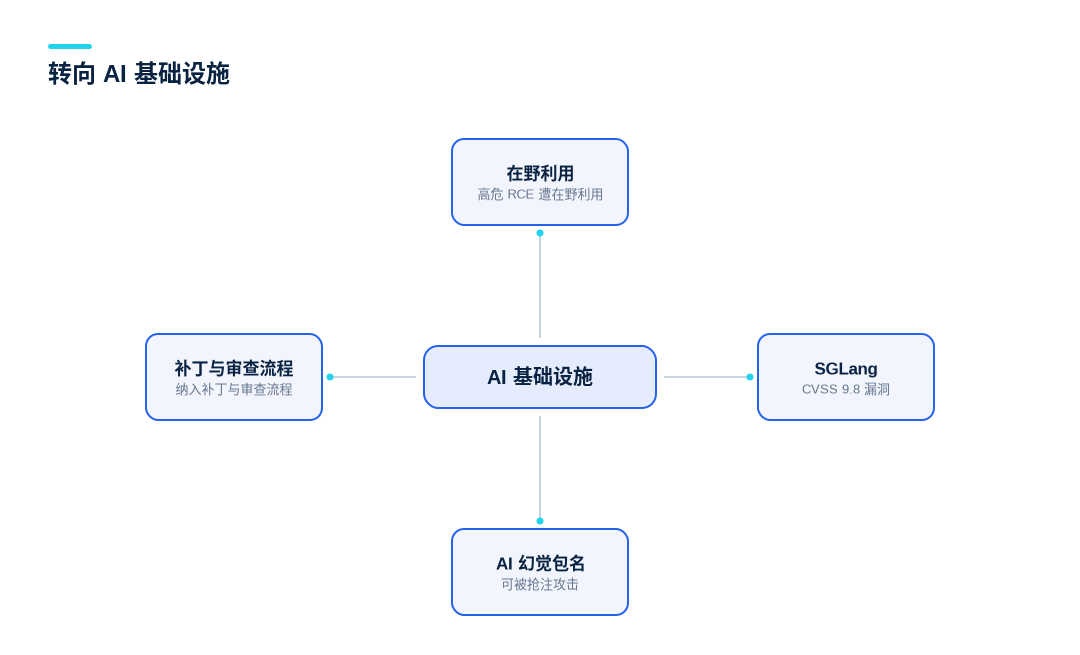
Palo Alto Networks' critical PAN-OS RCE is under active exploitation, with CISA mandating fixes by a deadline; inference framework SGLang exposed a CVSS 9.8 vulnerability; research shows 19.7% of 576,000 samples contained AI-hallucinated package names open to squatting attacks. We recommend verifying firewall versions this week and bringing inference frameworks and AI-generated dependencies into your patching and review processes.
Today at a Glance
- Curated news stories today
- 8items
- Expected Anthropic IPO valuation
- 1.5trillion USD
- AI outputs with hallucinated package names
- 19.7%
- CVSS score of the SGLang flaw
- 9.8
Market & Industry Watch
Investors Cut Anthropic IPO Valuation Expectations to ~$1.5 Trillion
According to Reuters, citing people familiar with the matter, after Anthropic released its latest financials and with AI funding costs continuing to climb, some existing investors and prospective IPO participants have begun considering a lower valuation: the market had expected roughly $2 trillion at its November listing, but levels discussed at an investor day have fallen to about $1.5 trillion (about RMB 10.05 trillion), with slowing revenue growth the main concern. For management teams, the correction in leading model companies' expected valuations signals that the investment logic for AI spending is turning rational — project approval and procurement should place greater emphasis on quantifiable business returns.
Learn MoreJensen Huang: AI Chip Orders Keep Outpacing Supply, Booked Two Years Out
In a BG2 podcast interview, NVIDIA CEO Jensen Huang said customer orders for AI chips continue to exceed the company's supply capacity, with new orders pouring in nearly every day; even amid a sharp tech selloff and questions about how the expansion will be funded, massive orders from leading cloud providers, emerging AI compute operators, and device makers show no sign of slowing. Customer demand forecasts typically run at least a year ahead, and the largest customers are already planning two years out. This means compute supply will remain tight in the short term — enterprises planning GPU resources and AI project timelines should build in longer procurement lead times and watch pricing and quota risks.
Learn MoreAI Spam Overwhelms Bug Bounty Triage; Google and Intel Adjust Programs
Per the FreeBuf morning briefing, floods of AI-generated low-quality, invalid vulnerability reports are overwhelming bug bounty triage channels, forcing tech giants such as Google and Intel to adjust or even pause their bounty programs and shifting industry security strategies. Two direct implications for enterprises: companies running their own SRC or crowdsourced testing programs should quickly add filtering and triage for AI-generated content, or real vulnerabilities may get drowned out; organizations relying on external vulnerability intel should expect slower responses from some vendors, making proactive vulnerability prioritization more important.
Learn MoreAI Updates
Meta's 816B-Parameter Open Model Runs Locally on Two Mac Studios
On October 15, Meta released Muse Spark Open, an open-weight model with 816 billion total parameters, about 42 billion activated per inference, and support for 1 million-token contexts, targeting coding, complex reasoning, and AI agent tasks; in partnership with Apple, it runs locally on two Mac Studios, each with 512GB of unified memory and an M5 Ultra chip. For decision-makers, the significance is that flagship-scale open-weight models can now be deployed locally at the desktop level — a new local inference path for workloads involving sensitive data or strict compliance. Further reading: for the latest pricing and plan comparisons, see the AI Radar (/ai-radar/pricing).
Learn MoreQwen Office E-commerce Edition: Open a Store in 7 Days for a Few Hundred Yuan
QbitAI reported a real-world enterprise agent deployment: using Qwen Office E-commerce Edition, a store went from setup to launch in about 7 days at a cost of a few hundred yuan, saving roughly 50,000 yuan versus a conventional launch. The value of this case lies not in the tool itself, but in how the "office foundation + industry scenario" combination is driving down both the barriers to using AI and the upfront costs. SMEs are advised to start with low-cost pilots on single business functions such as customer service, product selection, or content, validate productivity gains, and only then scale up — rather than committing to large upfront investment.
Learn MoreSecurity Incidents
Palo Alto PAN-OS Critical RCE Exploited in the Wild; CISA Sets Deadline
Palo Alto Networks has released a patch for a post-authentication remote code execution vulnerability in PAN-OS that gives attackers root access to the device; limited in-the-wild exploitation has been observed, and CISA is requiring affected agencies to remediate by a deadline. Firewalls typically sit on the front line of the network perimeter — a compromise effectively opens the internal network. All organizations running PAN-OS should immediately check their device versions, complete upgrades within the remediation window, and review recent authentication logs for signs of anomalies.
Learn MoreSGLang Exposes CVSS 9.8 Deserialization RCE; Inference Stacks at Risk
A CVSS 9.8 deserialization remote code execution vulnerability has been disclosed in SGLang, a high-performance LLM inference framework. With roughly 36,900 GitHub stars, SGLang is widely used for large-scale inference and agent workloads in AI labs and enterprise environments; analysis notes that even disabling pickle-related features does not fully eliminate the risk, reflecting structural security debt in AI inference stacks. Organizations running self-hosted or managed LLM services should bring inference frameworks into their critical vulnerability patch management scope, verify deployed versions promptly, and assess their external exposure.
Learn MoreAI-Hallucinated Package Names: A New Attack Surface in 19.7% of Samples
AI coding assistants sometimes invent third-party package names that do not exist; attackers register these names first and poison them, so developers who install them get compromised. Known as slopsquatting, this technique has moved from experiments to an attack surface with real downloads. Statistics covering 16 code models and 576,000 samples show that 19.7% of model outputs contain hallucinated package names. Enterprises should write "verify every AI-generated dependency name against the official source" into their development standards, and enable allowlists or proxy review on artifact repositories to keep squatted packages out of production.
Learn MoreFollow Zhaoxun
Get daily updates on the latest AI and information security developments — contact us for your security program needs.