
Today’s Briefing
Today’s signals boil down to one point: AI compute has entered a phase where in-house alternatives and persistent shortages coexist, so cost plans need flexibility. On the security front, several critical vulnerabilities were exploited in the wild within hours of their patches being released. The patch window is now a primary attack battleground, and emergency response must operate on an hourly timescale.
Market Trends: In-House Chips Amid Persistent Shortages
Microsoft released its third-generation in-house Maia chip and announced that business workloads will run primarily on its own hardware, reducing reliance on NVIDIA. Intel CEO Lip-Bu Tan expects AI hardware shortages to persist for two to three years. Together, these developments point to diverging cloud provider cost structures and no near-term easing in GPU supply, so enterprises planning AI budgets need buffers for compute prices and delivery timelines.
Industry Trends: Agent Pilots Struggle to Scale
Industry statistics show that 89% of AI Agent pilots stop before reaching production. Meanwhile, researchers used a simple prompt to bypass 6 leading Agent frameworks and verified 253 vulnerabilities in open-source MCP servers. Deployment bottlenecks and security gaps persist, making security assessment and operations sign-off mandatory gates for Agent project approval.
AI Trends: Frontier Models Move to Subscriptions
Meta released the new Muse Wonder model with monthly subscription tiers of USD 20 and USD 100. Zuckerberg says it has caught up with frontier AI competitors. Leading vendors are accelerating AI subscription revenue beyond advertising, giving enterprises more choice; procurement should compare value by task outcomes rather than parameter count.
Security Landscape: The Patch Window Is the Attack Window
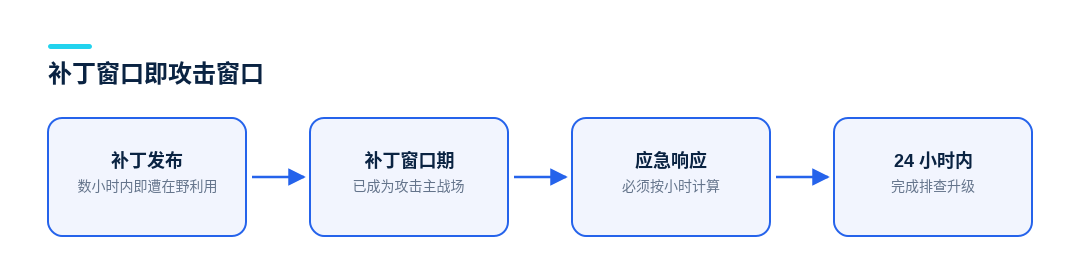
A national cloud platform in Japan was hit by ransomware, encrypting 3.6PB of data in 7 minutes. After the patch for a critical SonicWall SMA 1000 vulnerability, monitoring detected 135 attack attempts. GitLab has patched a critical RCE exploitable without authentication. Edge devices and self-hosted code platforms should be the patch priority, with assessments and upgrades completed within 24 hours.
Today at a Glance
- stories today
- 8featured
- MCP server vulnerabilities
- 253verified
- after SonicWall patch
- 135attack attempts
- data encrypted on a Japanese cloud platform
- 3.6PB
Market and Industry Trends
Microsoft Unveils Third-Generation Maia Chip, Reducing NVIDIA Reliance
Microsoft has officially released its third-generation in-house AI accelerator, Maia, and announced that future workloads will primarily run on its own chips. The move is intended to strengthen its full-stack AI capabilities and reduce long-term reliance on NVIDIA GPUs. It signals the beginning of divergent compute cost structures among leading cloud providers, potentially lowering cloud inference prices over the long term while widening capability gaps between platforms in the short term. When selecting AI services and cloud platforms, enterprises should compare the price and performance of inference offerings supported by each provider’s in-house chips and include workload portability in contract terms.
Read Full StoryIntel CEO: AI Hardware Shortages to Last Two to Three Years
At a DBS conference in Singapore, Intel CEO Lip-Bu Tan said the AI industry will continue to face hardware shortages for the next two to three years. He also noted that agentic AI adoption is creating new demand for CPUs, not just GPUs, helping revive Intel’s data center business. For enterprises, tight compute supply is likely to last at least two budget cycles. Organizations should secure GPU and server capacity and pricing early, and factor delivery lead-time risk into AI project schedules to prevent projects from waiting on hardware.
Read Full StoryAI Agent Scaling: 89% of Pilots Stall Before Production
Industry observations show that 89% of AI Agent projects stall before production, failing to make the final leap from demonstration to deployment, largely due to gaps in security and engineering. This echoes other security research showing that mainstream Agent frameworks can be bypassed with simple prompts and that open-source MCP servers harbor numerous vulnerabilities. For enterprises developing or scaling Agents, this failure rate means closing capability gaps before deployment. Production security baselines, observability, and rollback mechanisms should be built into acceptance criteria, raising the bar from “demo-ready” to “production-operable.”
Read Full StorySecurity Incidents
Ransomware Hits National Cloud Platform in Japan: 3.6PB Encrypted in 7 Minutes
A national cloud platform in Japan was hit by ransomware. It took only about 7 minutes to encrypt all 3.6PB of data, while the operations team spent 7 hours unable to find a ransom note, leaving emergency response nearly ineffective. The incident shows that traditional manual “detect—assess—respond” processes cannot keep pace with automated ransomware tools, even at massive scale. Large data platforms must stop malicious encryption before it begins. Enterprises hosting critical business data should verify three controls: real-time alerts for abnormal bulk writes, truly isolated and usable offline backups, and realistic recovery drills against targets measured in hours.
Read Full StorySonicWall SMA 1000 Critical Vulnerability Exploited in the Wild; 135 Attempts
The SonicWall SMA 1000 series is affected by CVE-2026-102255, a critical vulnerability with a perfect CVSS score. Large-scale exploitation in the wild began immediately after the official patch, and monitoring has detected 135 attack attempts. The flaw is in a remote access appliance; once exploited, it can let attackers steal sensitive information and penetrate corporate intranets, making it a typical entry point for breaching one system and moving laterally across the enterprise. Organizations still using SMA 1000 for remote work or VPN access should immediately verify their versions and apply the patch, review recent anomalous login logs, and, if necessary, reduce the device’s public exposure.
Read Full StoryGitLab Patches Critical RCE Exploitable Without Login
GitLab has patched a critical remote code execution vulnerability that attackers could exploit remotely without credentials, putting self-hosted deployments at greatest risk. GitLab often hosts an enterprise’s entire source code and CI/CD pipelines, so a breach can cause not only code loss but also supply-chain risk through backdoors inserted during builds. Organizations running self-managed GitLab should upgrade the same day. Those unable to upgrade should restrict external access to the instance and monitor for suspicious processes; the official SaaS offering has relatively limited exposure.
Read Full Story6 Mainstream AI Agent Frameworks Bypassed by a Simple Prompt
Security researchers used a simple “repeat after me” prompt to bypass defenses in 6 mainstream AI Agent frameworks and manipulate Agents into making malicious tool calls. The research also verified 253 security vulnerabilities across hundreds of open-source MCP servers. Prompt injection has shifted from a theoretical risk to a low-cost, real-world attack surface. Before connecting Agents to internal systems, enterprises should include them in security testing, apply least privilege to tool calls, and treat framework-level tool controls as a hard selection criterion.
Read Full StoryFollow Zhaoxun
Get daily updates on the latest AI and Information Security developments, or contact us to discuss your security program needs.