
Daily Briefing
Today's Overview
Key takeaway: AI is simultaneously lowering the attack bar and the cost of enterprise adoption. On the security side, threat actors now have much longer reach—from stealing CI/CD credentials in supply chains to a solo attacker breaching financial institutions using open-source AI tools. Credentials and supply chains are the exposures to tighten first.
On the industry side, the signal is the opposite: GPT-6 opens up for free, office Agents mix and match models, and the leaders' competitive focus has moved to the workflow entry point. The cost of adopting AI applications is trending down—opportunity and exposure are both expanding.
Market Trend: Memory Price Spike Eats Into PC Demand, Capital Flows to Agents
IDC reports global PC shipments of 62.7 million units in Q3 2026, down 20.1% year-on-year—the second consecutive quarter of decline. The main reason: vendors and channels overstocked early in the year to hedge rising memory prices, pulling demand out of this quarter. In the same period, Agent startup Manus secured USD 500 million in new funding and reopened its Beijing office for aggressive hiring. The contrast signals IT budgets shifting from hardware to the AI application layer—device refresh budgets should leave room for memory price volatility.
AI Update: Office Agents Enter the Free, Multi-Model Era
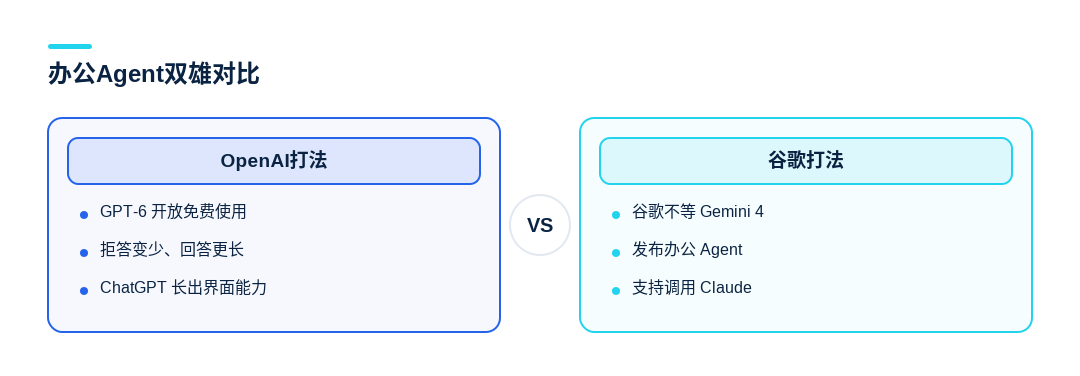
OpenAI made GPT-6 free to use: refusals drop, answers get longer, and the ChatGPT chatbox is gaining UI capabilities. Without waiting for Gemini 4, Google released its office Agent with support for invoking Claude. The competitive battleground is shifting from model parameters to office workflow entry points. For enterprises, this means the cost of rolling out AI assistants and vendor lock-in risk are both falling—put office Agents on your next productivity-tools evaluation list.
Security Posture: Credentials and Supply Chains Are the Biggest Exposures
GhostAction is back: malicious GitHub Actions have been planted in hundreds of repositories, and the stolen CI/CD credentials are reusable across multiple threat groups. Japan is seeing a surge in Web data leaks, with mobile API abuse compounded by Metabase vulnerabilities—tens of millions of user records compromised. Atlassian's critical vulnerability was exploited in the wild within hours of disclosure. And one attacker using open-source AI tools breached multiple Korean financial institutions. Credential governance and patching speed both need to step up.
Today's Snapshot
- Today's Picks
- 8items
- Manus New Funding
- 5USD 100M
- Q3 Global PC Shipments (-20.1% YoY)
- 627010K units
- Sources Covered
- 3sources
Market & Industry Watch
IDC: Q3 Global PC Shipments Hit 62.7M, Down 20.1% YoY
IDC released its report on October 8: global PC shipments in Q3 2026 came in at 62.7 million units, down 20.1% year-on-year—a drop of 15.8 million from 78.5 million in the same quarter of 2025. The result breaks the typical seasonal pattern of Q3 outperforming Q2 and marks the second consecutive quarter of YoY decline. By vendor: Lenovo fell 22.6%, HP 30.9%, Dell 25.0%, Apple 11.3%. IDC attributes the slide primarily to vendors and channels overstocking early in the year to hedge rising memory prices, which pulled demand out of the quarter. For enterprise procurement leaders, this means refresh cycles are tightly coupled to memory cost volatility—re-plan PC refresh budgets and leave headroom for price spikes.
Learn MoreManus Lands USD 500M New Funding, Reopens Beijing Office for Major Hiring
AI Agent startup Manus secured USD 500 million in new funding while reopening its Beijing office for aggressive hiring, going head-to-head with domestic Agent players for talent. The team had previously shifted focus overseas; the return is seen as a bet on China's Agent application market and engineering talent pool. For enterprise leaders, this confirms capital remains hot in the Agent application layer—more options at selection time, but vendor funding stability and team continuity should factor into procurement to hedge the sector's shakeout risk.
Learn MoreAI Updates
GPT-6 Free Starting Today: Fewer Refusals, Longer Answers
OpenAI announced GPT-6 is now free to use, with noticeably fewer refusals and longer answers. The ChatGPT chatbox is also gaining UI capabilities, enabling more complete interaction flows. Freeing the flagship model means frontier AI capabilities are rapidly becoming mainstream infrastructure—the bar for enterprise pilots and everyday employee use is dropping further. But free access also widens the path for sensitive data to flow into public models; align employee usage boundaries and data classification requirements now. See the latest pricing and plan comparison in AI Radar.
Learn MoreGoogle Launches Office Agent with Claude Support
Even before Gemini 4 arrives, Google has rolled out an office-focused Agent product with support for invoking competitor Anthropic's Claude model within workflows. Mixing and matching models to assemble productivity tools signals the big players' competitive focus has shifted from single-model supremacy to capturing the office workflow entry point and orchestration layer. For enterprises, office AI assistants no longer need to lock to a single model vendor—match models to tasks by cost-performance. Make multi-model integration capability a hard requirement in procurement evaluations.
Learn MoreSecurity Incidents
GhostAction Returns: CI/CD Credentials Stolen from Hundreds of Repos
The GhostAction supply-chain attack is back: attackers planted malicious Actions workflows in GitHub repositories to steal CI/CD credentials. Hundreds of repositories have been compromised, and some still host malicious files, posing an ongoing exfiltration risk. The leaked credentials can be reused by multiple threat groups, creating cascading harm. CI/CD credentials often grant direct access to cloud resources and production environments—R&D teams should immediately review workflow change history, rotate all pipeline secrets, and scope pipelines down to least privilege.
Learn MoreJapan Web Data Leaks Surge: API Abuse Meets Metabase Vulnerabilities
Japan is seeing a sharp rise in Web data leaks, with attacks concentrated on two vectors: indiscriminate abuse of exposed mobile app backend APIs, and exploitation of known vulnerabilities in data components like Metabase. Together, these have led to tens of millions of user records being compromised. Both paths bypass traditional network perimeters and strike directly at the application and data layers. For enterprises, mobile API authentication and rate limiting, plus open-source component patch management, are the two gaps most worth self-checking right now.
Learn MoreAtlassian Critical Vulnerability Exploited in the Wild Within Hours of Disclosure
Atlassian's critical vulnerability CVE-2026-21589 saw real-world exploitation within hours of its details going public. Attackers can leverage it without authentication to steal sensitive files. The window from disclosure to in-the-wild exploitation has compressed to hours—the remediation window for enterprises is shrinking fast. Teams running Atlassian products should verify exposure today and patch immediately. Instances directly exposed to the public internet should be prioritized—do not wait for the regular patch cycle.
Learn MoreSolo Attacker Breaches Multiple Korean Financial Institutions Using Open-Source AI Tools
A lone hacker, using only the open-source AI penetration testing tool ARTEX, breached multiple Korean financial institutions and stole sensitive customer and employee data. The full kill chain—recon, exploitation, and exfiltration—that once required a full team can now be completed by one person with AI tools, dramatically lowering the attack bar. Threat modeling needs to update its attacker-capability assumption. Financial institutions and data-intensive enterprises should incorporate AI-driven automated attacks into their exercise scenarios.
Learn MoreFollow Zhaoxun
Get daily AI and information security updates. Reach out for any security program needs.