
AI Model Watch | 2026-11-20
Today's Briefing
Today's key development is the expansion of open-source scale: Tencent Hunyuan has released the full Hy4 weights, with 770B total parameters and an MoE architecture, taking self-hosted domestic multimodal open-source models to a new scale. At the same time, Google made the Genie 4 world model commercially available through the Gemini API and delivered computer-use capabilities on Mac. Enterprises should consider both “open-source self-deployment” and “agent execution permissions” in their next evaluation cycle.
New Models: World Models Enter Metered Commercial Use
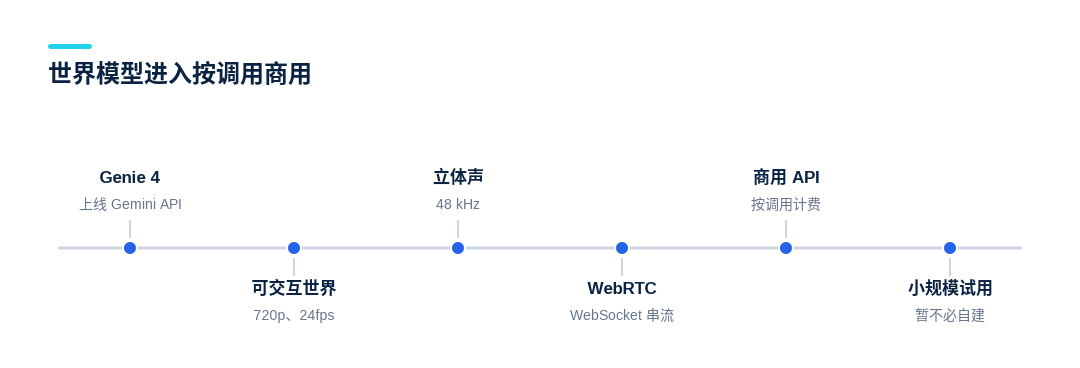
Genie 4 is now available on the Gemini API and AI Studio, generating interactive worlds from text or images at 720p and 24fps, with 48 kHz stereo audio and WebRTC or WebSocket streaming. As world models move from research demos to usage-based commercial APIs, teams working on simulation, game prototyping, and immersive training can start with small-scale trials without building their own real-time rendering capabilities.
Capabilities and Evaluations: Agent Execution Advances on Three Fronts
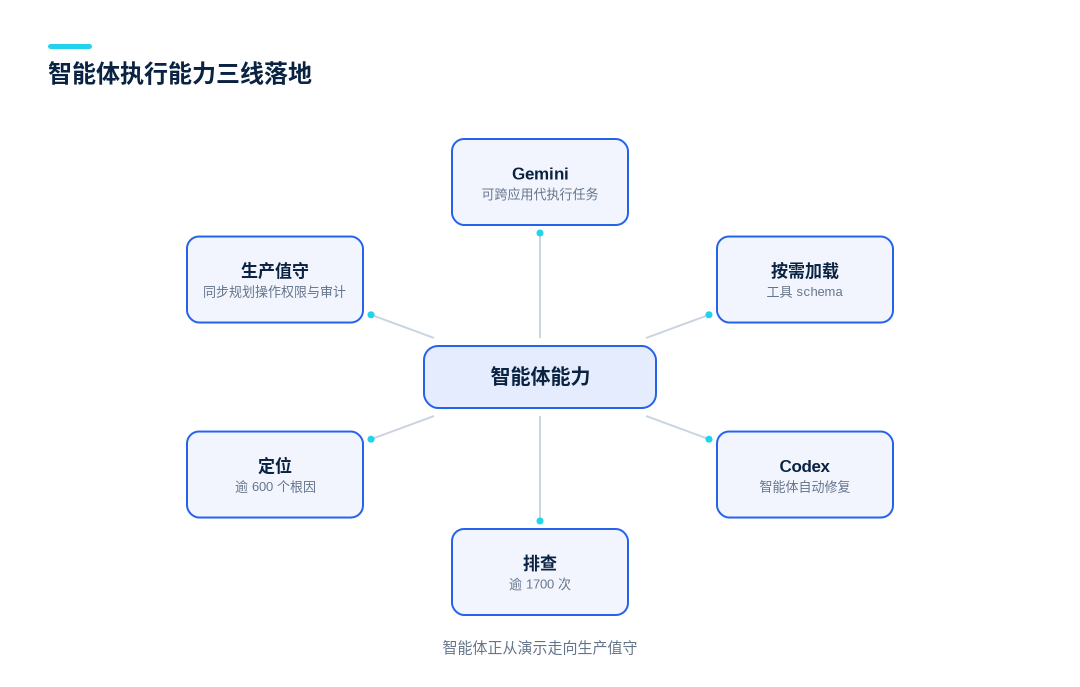
Although no new benchmark data was released today, agent capabilities advanced on three fronts: Gemini for Mac now supports computer use and cross-application task execution; Tool Retrieval is in preview on the Gemini API, loading tool schemas on demand to reduce input tokens; and OpenAI disclosed that Codex agents automatically resolved ChatGPT performance regressions, investigating more than 1700 cases over three months and identifying more than 600 root causes. The key trend is agents moving from demos to continuous production operations, requiring operating permissions and auditing to be planned alongside deployment.
Pricing and Open Source: Open-Source Flagship Scale Reaches New Heights
With Hunyuan Hy4 weights now open, including a security assessment System Card and GGUF downloads, the team will also host an AMA on r/LocalLLaMA this Friday. This gives data-sensitive industries with private deployment requirements an additional domestic flagship multimodal option. However, inference clusters with 49B activated parameters are costly, so teams should calculate cost per token before selecting a model.
Today's Snapshot
- Hunyuan Hy4 open-weight total parameters
- 770B
- Hy4 context window (tokens)
- 1M
- Genie 4 real-time world generation frame rate
- 24fps
- Performance Factory automated performance investigation (over 3 months)
- 1700times
New Model Releases
Tencent Hunyuan Releases Full Hy4 Weights, Enabling Self-Hosted 770B Deployment
Tencent Hunyuan has released the open weights for its flagship Hy4 model: a natively multimodal MoE architecture with 770B total parameters, 49B activated per inference, and a context window of 1M tokens. The release includes a Hy4 System Card with security assessments. Weights and GGUF files can be downloaded from GitHub and Hugging Face, and the team will hold an AMA on r/LocalLLaMA this Friday.
Data-sensitive use cases now have a flagship self-hosted multimodal option, but 770B-class inference clusters require significant investment. Calculate unit costs before switching; see AI Radar (/ai-radar/opensource) for more open-source project insights.
Google's Genie 4 World Model Launches on Gemini API with 720p Real-Time Interaction
Genie 4 is now integrated with the Gemini API and AI Studio. Enter text or an image to generate an interactive world at 720p and 24fps. Controls support WASD keys and prompts, with 48 kHz stereo audio. Streaming is available over two channels: WebRTC (with a temporary token for browsers) and WebSocket. Documentation is available in AI Studio.
Teams in simulation, game prototyping, or immersive training can try it on a pay-as-you-go basis without first building their own real-time rendering capabilities.
Capabilities and Evaluations
Gemini API Previews Tool Retrieval with On-Demand Tool Schema Loading
Google has introduced Tool Retrieval in preview within the Gemini API's Interactions API. Agents no longer need to carry the full tool library in every request; instead, they load the parameter schemas for required tools on demand. The goal is to reduce input token consumption while maintaining tool-selection accuracy as the number of tools grows, making it suitable for agent applications with extensive tool integrations.
Input costs for tool-heavy agents could fall, making it worth evaluating during the preview for teams that extensively use Gemini.
Connect with Zhaoxun
Receive daily insights on the latest AI and Information Security developments, and contact us with any security build-out needs.