
Today's Highlights
Today’s core takeaway: Marginal returns from general-purpose benchmarks are narrowing, and vendors are anchoring value to research outputs and agent runtime efficiency. The basis for model selection is changing—leaderboard rankings carry less weight, while outputs for specific tasks and unit costs carry more. Enterprises should include both in their evaluation checklists.
Models and Products: Benchmark Gains Plateau, Research Emerges as the New Anchor
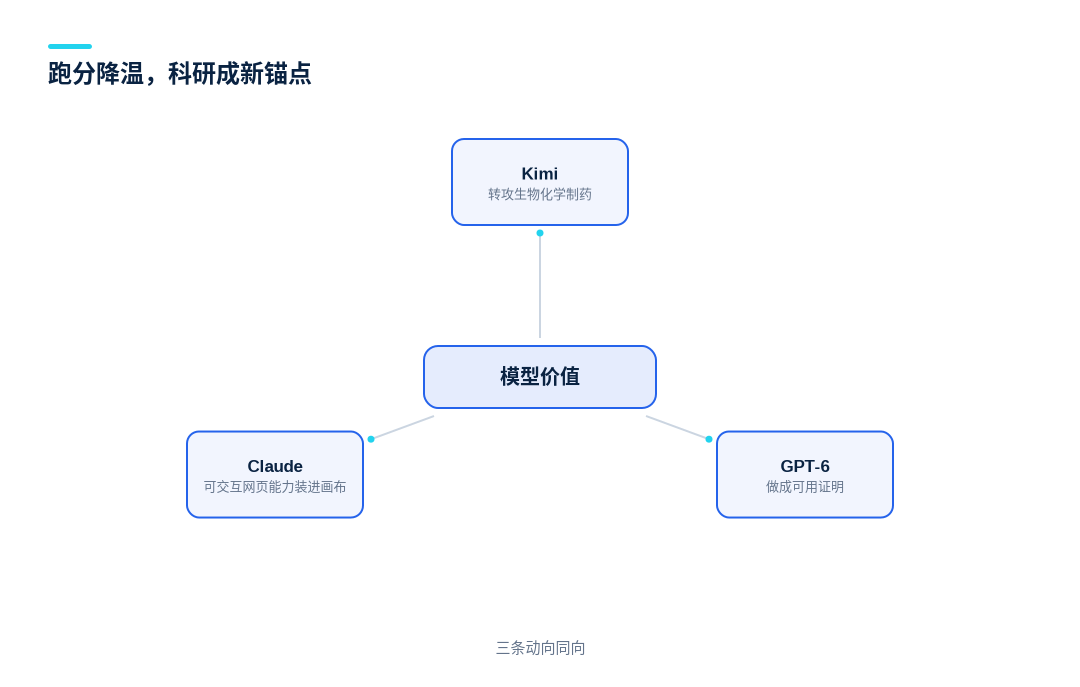
Moonshot announced that Kimi is shifting away from coding benchmarks and into biopharmaceutical research; GPT-6 Astra turned a particle physics problem unresolved for 25 years into a usable proof; and Claude brought interactive webpage creation into its canvas. All three moves point in the same direction: model value is shifting from leaderboard rankings to outputs in specific scenarios, making it easier for enterprises with R&D or content-production needs to find matching capabilities.
Research Frontiers: Memory’s Value Lies in Selection, Not Accumulation
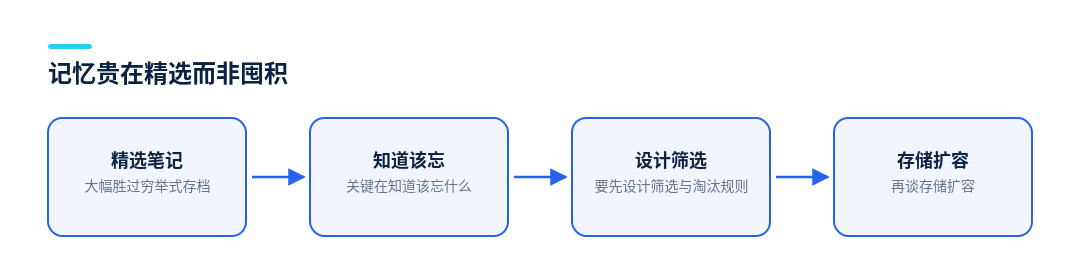
Research by Anthropic into Claude’s cross-session memory shows that curated notes outperform exhaustive archives by a wide margin; the key is knowing what to forget. In the Pokémon Red test, Claude Fable 5 advanced four times as far as the older Sonnet 3.7 using only a small set of strategy files. For enterprises building their own agents, memory systems need selection and eviction rules before storage is scaled.
Open-Source Ecosystem: Harness Past Experience to Cut Costs
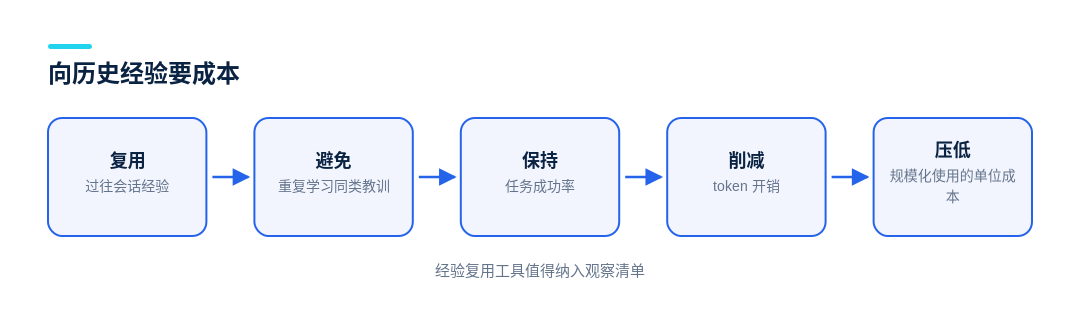
Microsoft Research open-sourced TokenEconomizer, enabling coding agents to reuse experience from previous sessions and avoid relearning the same lessons while reducing token costs without lowering task success rates. The hidden costs of coding agents stem mainly from repeated trial and error, so tools for experience reuse deserve a place on the watchlist and are expected to directly reduce unit costs at scale.
Today at a Glance
- Featured stories today
- 5items
- Content groups
- 3groups
- Fable 5 test progress vs. Sonnet 3.7
- 4×
- GPT-6 Astra problem unresolved for
- 25years
Models and Products
Kimi Abandons Coding Benchmarks for Biopharma
Moonshot AI said it would stop chasing coding benchmarks and steer Kimi toward biology, chemistry, and pharmaceutical research, arguing that scientific tasks demand more from AI than legal, financial, or coding work. The move comes as benchmark gains are leveling off, making future investment in Kimi’s general-purpose coding roadmap worth watching.
Reassess coding roadmaps; research and pharma firms can track Kimi’s scientific progress.
GPT-6 Astra Turns a Particle Physics Puzzle into a Proof
OpenAI physicist Nathaniel Craig used GPT-6 Astra to tackle a particle physics problem that had remained unresolved for more than 25 years. He provided a strategy for defining the complete Standard Model on a computational lattice, and the model turned the problem into a usable proof. The case shows that frontier models can already produce verifiable results in fundamental research.
Pharma, materials, and chemical companies can evaluate models for derivations and formal proofs.
Claude Builds Interactive Webpages in Canvas
Claude has added in-canvas website building: web elements such as text and buttons can be embedded in complex graphics and 3D effects to generate truly interactive HTML pages. Using standard web technologies, it recreates the rich interactions of the Flash era, lowering the barrier to generating and iterating on marketing pages, product demos, and similar content.
Marketing and training teams can build demos; compare plans in AI Radar.
Research Frontiers
Anthropic: Agent Memory Hinges on Trade-offs
Anthropic’s research into how Claude retains knowledge across sessions found that the key is knowing what to forget, not how much can be stored: curated notes far outperform exhaustive archives. In the Pokémon Red test, the new Claude Fable 5 advanced four times as far as the older Sonnet 3.7 using only a small set of strategy files.
Long-running agent teams should design memory selection and eviction before expanding storage.
Open-Source Ecosystem
Microsoft Open-Sources TokenEconomizer to Cut Agent Token Costs
Microsoft Research open-sourced TokenEconomizer, a plugin that allows AI coding agents to learn from previous sessions. It targets the time and token waste caused by agents repeatedly relearning the same lessons, reducing costs while maintaining task success rates. The goal is to make coding agents that can both solve problems and accumulate experience.
Test TokenEconomizer to cut costs; explore more open-source projects in AI Radar.
Explore Zhaoxun
Stay current on the latest developments in AI and Information Security. Contact us to discuss your security program needs.