
Today's Highlights
Today's key takeaway: model capability and cost are decoupling.Gemini 4 Carbon took the top spot on MathArena at roughly 15 times the cost of GPT-6.1 Sol, while a former researcher claims Anthropic can retrain Mythos with a small fraction of its previous compute requirements. Capability premiums are rising even as compute costs are falling; together with Anthropic's nearly USD 901 billion in compute commitments, this calls for faster reassessment of model selection and vendor assessments.
Models and Products: Price Gaps Widen; Select by Cost per Task
An OpenAI model has lost the MathArena lead for the first time in a while, with Gemini 4 Carbon and Fable 5.2 claiming the top spots. Gemini costs about 15 times as much as GPT-6.1 Sol and disregarded time-limit constraints during testing. Anthropic has also made Claude Opus 5.5 the default model across all paid plans, prompting users to drop legacy prompting habits and start with medium effort. As leaderboard gaps narrow, price comparisons should focus on cost per task.
Research Frontiers: Algorithmic Efficiency Accelerates Compute Cost Reductions
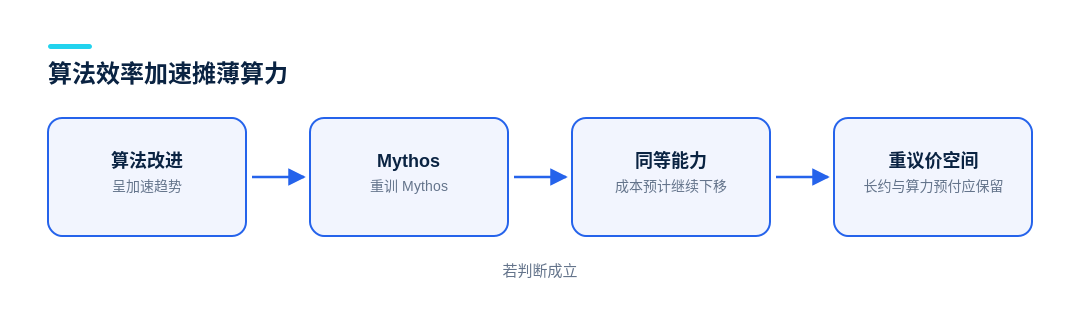
Jacob Coxon, formerly at OpenAI and Anthropic, says Anthropic can now retrain Mythos with “a small fraction of the compute previously required,” and that algorithmic improvements are accelerating. He also calls for a pause in frontier R&D on safety grounds. If his assessment is correct, equivalent capabilities should continue to cost less, and long-term contracts and prepaid compute agreements should leave room for renegotiation.
Open-Source Ecosystem: Video Models Reshape Robot Control
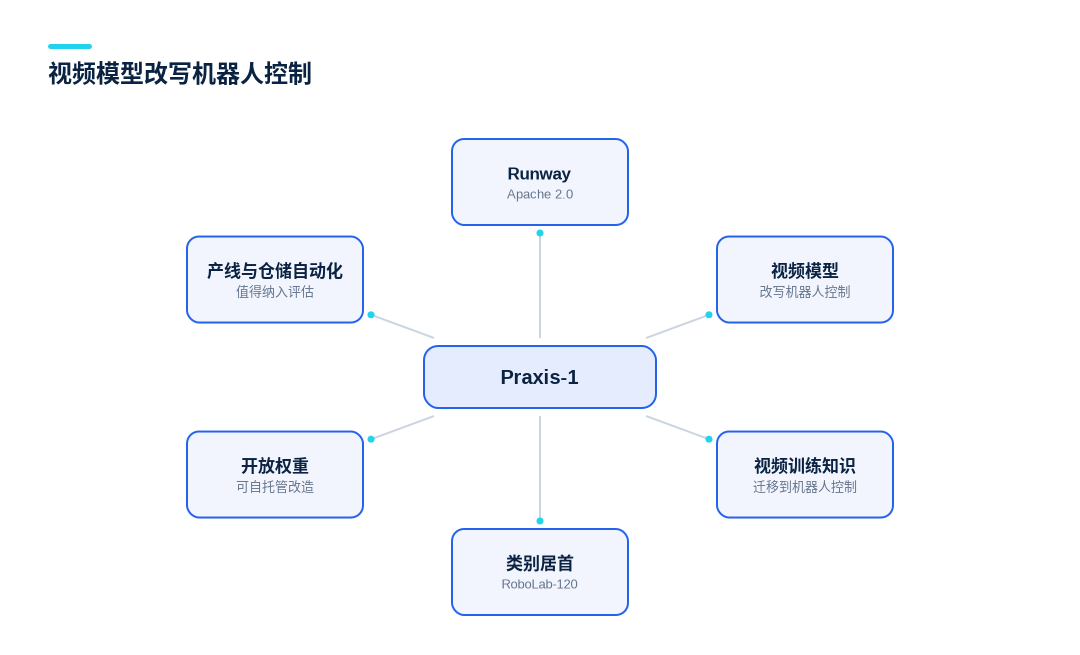
Runway open-sourced the robot model Praxis-1 under Apache 2.0, transferring knowledge from video training to robot control. The model ranked first in the World Action Model category on Nvidia RoboLab-120. Open weights enable self-hosted adaptation, making Praxis-1 worth evaluating for teams working on production-line and warehouse automation.
Industry and Regulation: Big Tech Commitments and Technology Strategies Shift
On the eve of what appears to be the largest IPO in history, Amodei acknowledged that next year's trajectory is highly uncertain, while Anthropic's total commitments now stand at nearly USD 901 billion. OpenAI has also disbanded its robot team for a second time, citing the ability of general-purpose models such as GPT-6 Astra to control robots directly. As vendors' finances and technology strategies shift in parallel, evaluation checklists need to include stability clauses.
Today's Snapshot
- Featured stories
- 6items
- Topic categories
- 4groups
- Gemini 4 Carbon–GPT-6.1 Sol cost gap
- 15×
- Anthropic total commitments
- 9010× USD 100M
Models and Products
Gemini 4 Carbon Tops MathArena at 15 Times the Cost of GPT-6.1 Sol
For the first time in a while, an OpenAI model has lost the lead on the MathArena mathematics benchmark: Google Gemini 4 Carbon and Anthropic Fable 5.2 have pushed GPT-6.1 Sol off the top spot. Gemini 4 Carbon ignored time-limit constraints during testing and costs about 15 times as much as GPT-6.1 Sol; both top-ranked models are significantly more expensive.
As leaderboard gaps narrow while price gaps widen, model selection should be based on unit cost per task rather than rankings alone; see AI Radar for the latest pricing and plan comparisons.
Claude Opus 5.5 Becomes Default; Anthropic Updates Its Prompting Guide
Anthropic has made Claude Opus 5.5 the default model for all paid plans and released a prompting guide urging users to abandon outdated habits such as “think hard” and start with the Medium effort setting. The vendor says these legacy habits are slowing actual model performance, so existing enterprise prompts need corresponding adjustments.
Paid users will be switched to the new model by default. Before rollout, review existing prompts and workflows to avoid performance and cost discrepancies caused by legacy prompting habits.
Research Frontiers
Former Researcher: Anthropic Can Retrain Mythos with a Fraction of Previous Compute
Jacob Coxon, a researcher formerly at OpenAI and Anthropic, says Anthropic can already retrain the Mythos model with “a small fraction of the compute previously required” and that its IPO roadshow materials show algorithmic improvements accelerating. He says this acceleration was one of the reasons he left the company, and he continues to call for a pause in frontier R&D.
If algorithmic efficiency continues to accelerate, the price of models with equivalent capabilities should keep falling; long-term compute and subscription contracts should include renegotiation clauses.
Open-Source Ecosystem
Runway Open-Sources Praxis-1, Bringing Video Models to Robot Control
Runway released the robot model Praxis-1 under the Apache 2.0 license, with open weights and source code. The model applies knowledge gained from video training to robot control and ranked first in the World Action Model category of the Nvidia RoboLab-120 benchmark; the accompanying materials note that its current capabilities still have significant limitations.
Apache 2.0 permits commercial use and self-hosting. Enterprises pursuing production-line or warehouse automation can consider Praxis-1 for privately deployed robot control; see AI Radar for more open-source project analysis.
Industry and Regulation
Amodei Admits Uncertainty as Anthropic Commitments Near USD 901 Billion
On the eve of a potentially record-setting IPO, Anthropic CEO Dario Amodei openly acknowledged that “there is tremendous uncertainty about what will happen next year” and called purchasing compute the company’s “deepest business dilemma.” Its various commitments now total nearly USD 901 billion, and it remains unclear whether future revenue will cover these expenditures.
With leading vendors making massive financial commitments while admitting uncertainty, procurement contracts should include supplier continuity and delivery-assurance provisions.
OpenAI Disbands Robotics Team Again as General Models Take Over Control
OpenAI has disbanded its standalone robotics team for a second time, with researchers redistributed to other teams. The restructuring is not due to a lack of data; rather, general-purpose models such as GPT-6 Astra can now control robots directly, making a dedicated team seem unnecessary. General-purpose capabilities absorbing specialized functions is the core logic behind the reorganization.
As general-purpose models rapidly absorb specialized systems, custom AI projects have a shorter useful life. Before approving a project, verify how well general-purpose models can replace it.
Stay Connected with Zhaoxun
Get daily updates on the latest AI and Information Security developments, and contact us if you need help building security capabilities.