
2026-11-14
Today's Briefing
Today's signals point to one conclusion: capital and industry are both concentrating on leading AI companies. Anthropic is pursuing the largest public offering in its history, while its manufacturing-specific Claude is taking root in factory software; on the open-source side, llama.cpp has released 1.0, and the local deployment ecosystem is maturing in parallel. For enterprises, the basis for selecting models is shifting from isolated capabilities to vendor resilience and fit with business tasks.
Models and Products: AI Execution Extends into Business Systems
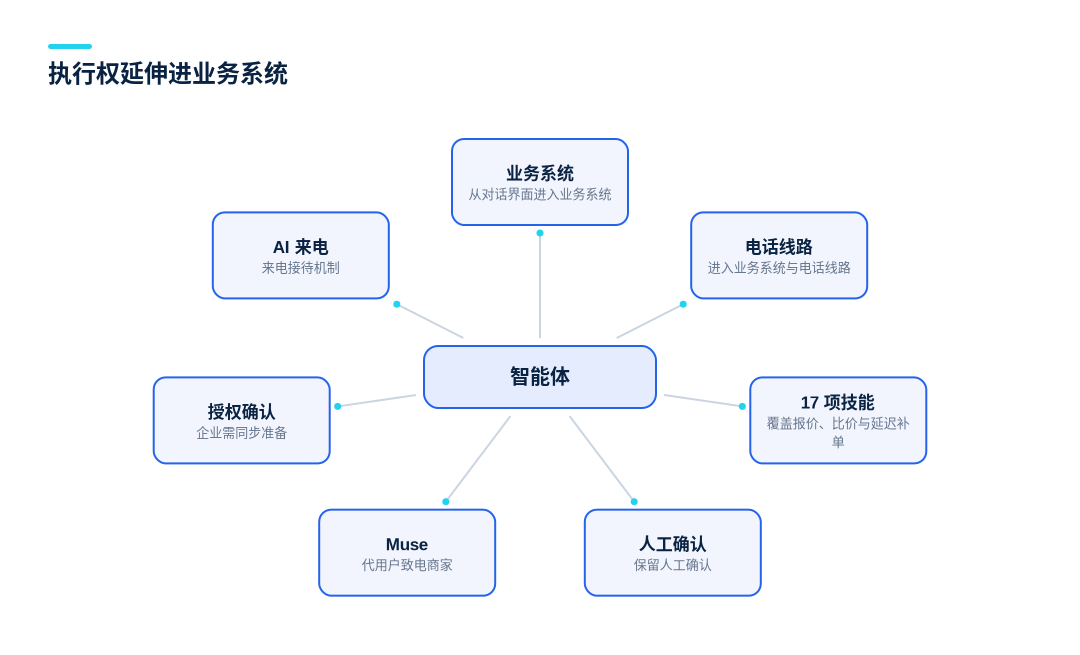
Product releases are focused on enabling AI to take direct action. Anthropic's Claude for Manufacturing connects directly to Autodesk Fusion, Oracle NetSuite, and Infor, with 17 skills covering quote drafting, price comparison, and reordering when deliveries are delayed, while retaining human confirmation; Meta's Muse has surpassed 10 million users and can call businesses on their behalf. Agents are moving from conversational interfaces into business systems and telephone lines, and enterprises need to prepare authorization-confirmation workflows and AI call-handling procedures in parallel.
Open-Source Ecosystem: Local Inference Stack Reaches a Stable Release
llama.cpp released v1.0.0, officially positioning it as a "stronger foundation" for the local AI ecosystem. The 1.0 release signals that the toolchain for running open-source models locally is stabilizing, with a more predictable maintenance cadence. Enterprises that need to keep data within their own environments or require private deployments should evaluate it as an alternative to cloud APIs.
Industry and Regulation: Capital Concentration and Compliance Evidence Advance in Parallel
Industry signals span both capital and compliance. Anthropic's IPO has received orders six times the number of available shares, with demand far exceeding supply; a former OpenAI researcher says NVIDIA Blackwell chip signatures have been detected in six Chinese models, moving export controls into the realm of technical evidence; nearly 70% of U.S. government agencies now use generative AI, while labor unions are seeking safeguards against AI monitoring and automated layoffs. Capital appeal and compliance risk are rising together, making this worth watching.
Today's Highlights
- Anthropic IPO oversubscription
- 6x
- Meta Muse user base
- 1000M+
- Claude manufacturing skills
- 17skills
- U.S. agencies using generative AI (nearly 70%)
- 70%
Models and Products
Anthropic Launches Claude for Manufacturing Integrated with Factory Software
Anthropic introduced the Claude for Manufacturing plugin, directly connecting AI to factory and operational software such as Autodesk Fusion, Oracle NetSuite, and Infor. Its 17 specialized skills can draft quotations, compare suppliers, and place backup orders when deliveries are delayed, with every action requiring human confirmation.
Manufacturers and discrete-industry firms can pilot quotation and procurement automation using an "AI drafts, humans approve" model while adding ERP access controls and operational audit trails. See AI Radar (/ai-radar/pricing) for the latest vendor pricing and package comparisons.
Meta Muse Can Call Businesses for Users as Its User Base Exceeds 10 Million
Meta has opened Muse's calling-on-behalf feature to U.S. paid subscribers, enabling the agent to contact businesses such as cable TV providers and restaurants and handle requests on users' behalf. Meta AI head Alexandr Wang says its user base has surpassed 10 million. Reports also note that many businesses may simply hang up on AI calls, so real-world connection rates remain to be seen.
Consumer-facing businesses need policies for identifying and handling AI calls, while the share of bot traffic on customer service and reservation lines is expected to rise.
Open-Source Ecosystem
llama.cpp Releases 1.0.0 as the Local Inference Stack Stabilizes
The open-source project llama.cpp released v1.0.0, officially positioning it as a "stronger foundation" for the local AI ecosystem. As a representative toolchain for running open-source large models on local hardware, the 1.0 release marks the project's stable phase and strengthens the long-term viability of tools for private and edge deployments.
Enterprises that need to keep data within their environments or require private deployments can include it in technical evaluations; 1.0 brings a more predictable upgrade and maintenance cadence. See more open-source project insights at AI Radar (/ai-radar/opensource).
Industry and Regulation
Anthropic IPO Draws Sixfold Oversubscription, Potentially the Largest Offering Ever
Anthropic's IPO has received orders six times the number of available shares, with subscription demand far exceeding supply. The Decoder reports that the company is on track to complete the largest public offering in history, providing a quantified measure of public markets' concentrated bets on leading model companies.
A leading vendor's ability to raise capital affects the long-term stability of its supply, so enterprises that adopt its models should include IPO developments in supplier risk assessments.
Blackwell Chip Signatures Detected in Six Chinese Models
Former OpenAI researcher Will DePue says he has obtained initial technical evidence that six Chinese AI models, including DeepSeek, Moonshot AI, MiniMax, and Ant Group, used NVIDIA's latest Blackwell GPUs despite U.S. export controls. His method identifies the hardware origin by reading characteristic signatures left by chip operations.
Export-control verification is moving toward technical evidence, so companies involved in cross-border compute and model partnerships should plan for compliance audits and fallback options.
Nearly 70% of U.S. Agencies Use Generative AI as Unions Push for Safeguards
Reports indicate that nearly 70% of U.S. government agencies are already using generative AI, as adoption continues to spread across the public sector. Union safeguards are beginning to catch up: a strike vote in Oakland led to retraining in place of layoffs, while a transport union in Ohio won veto power over autonomous vehicles. AI monitoring and automated dismissal are emerging as new labor-agreement issues.
Large-scale public-sector adoption signals tighter AI governance in highly regulated scenarios, so enterprises should define the boundaries of AI's impact on roles and employee monitoring before deployment.
Follow Zhaoxun
Receive daily updates on the latest AI and Information Security developments. Contact us if you need help building your security capabilities.