
Today's Briefing
Today's global signals focus on continued declines in AI unit costs: Google has introduced a dedicated low-cost model for decision tasks, Anthropic has used AI to shorten chip porting from months to 3 days, and enterprise spending growth has slowed across the industry. Selection and procurement criteria are shifting from general-purpose capabilities toward per-task pricing and compute elasticity, and purchasing checklists need to evolve in parallel.
Models & Products: Dedicated Models Take Over Decision Tasks
Google released the Gemini Decisions API, with Gemini Decision 1 evaluating up to 1,000 closed-ended questions per call across text, images, audio, and video. It responds in 150-250 milliseconds and costs about one-fifth of Gemini 3.5 Flash. DeepL's Aure model brings tone and pace into real-time translation. Decision-task workflows now have a low-cost, dedicated route from a leading vendor, while cross-language communication is moving closer to natural conversation.
Research Frontiers: Formal Verification Enters the Engineering Phase
Google DeepMind's AlphaProof Code completed mathematical verification of Signal's core encryption code in 4 weeks; comparable work typically took years. Agents wrote more than 6 million lines of proof code, with a flagging rate of only around 1%. This could reshape the cost structure of code verification in highly regulated scenarios such as payments and telecommunications.
Industry & Regulation: Revenue Divergence Meets Slower Spending
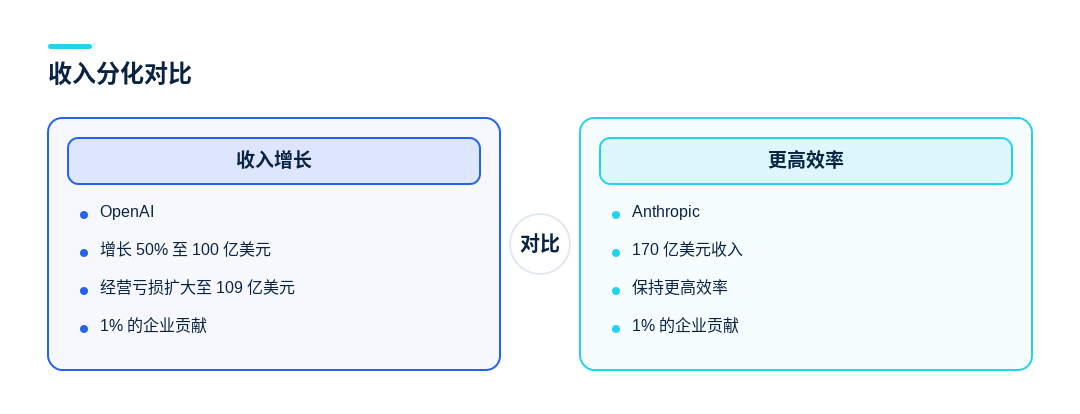
OpenAI's quarterly revenue grew 50% to USD 10 billion, but its adjusted operating loss widened to USD 10.9 billion. Anthropic achieved greater efficiency with USD 17 billion in revenue. Meanwhile, US enterprise AI spending growth slowed to 1.65% in October, and 1% of enterprises generated 80% of the two vendors' revenue. Notably, leading vendors' products and pricing will be increasingly shaped by a small group of major customers.
Today's At a Glance
- Today's highlights
- 6stories
- Gemini Decision 1 per-call limit
- 1000questions
- Claude ported to AMD GPUs in
- 3days
- OpenAI quarterly revenue
- 100USD 100M
Models & Products
Google Launches Gemini Decision 1, Evaluating 1,000 Questions per Call
Google DeepMind introduced the Gemini Decisions API and decision model Gemini Decision 1, with each call evaluating up to 1,000 closed-ended questions across text, images, audio, and video. It responds in 150-250 milliseconds and costs about one-fifth of Gemini 3.5 Flash. With Google's entry into the decision-model space, decision tasks now have a dedicated low-cost option from a leading vendor.
High-frequency decision workflows such as review, screening, and scoring can move to dedicated low-cost channels, with significant unit-cost reductions expected. See AI Radar (/ai-radar/pricing) for current pricing and plan comparisons.
DeepL's New Aure Model: Real-Time Translation Preserves Tone and Pace
DeepL released a new speech model, Aure, for its Voice real-time translation product. The model transfers the original speaker's tone, emotion, emphasis, and pace into the target language, addressing previously difficult scenarios such as sarcasm and emotional shifts. This brings real-time cross-language communication closer to natural conversation.
Translation experiences in global customer service and remote meetings are likely to improve; enterprises with multilingual service needs can evaluate integration options.
Research Frontiers
AlphaProof Code Mathematically Verifies Signal's Encryption Core in 4 Weeks
Google DeepMind's AlphaProof Code mathematically verified Signal's core encryption code in 4 weeks; comparable work typically took years. Agents powered by Gemini Carbon wrote more than 6 million lines of proof code, with a flagging rate of only around 1%. AI formal verification has reached scaled, real-world validation on high-assurance code.
This could reshape code-verification cost structures in highly regulated scenarios such as payments and telecommunications, making it worth assessing audit workflows early.
Industry & Regulation
Anthropic Uses AI to Port Claude to AMD GPUs in 3 Days
Anthropic says its internal model Mythos ported Claude to AMD GPUs in 3 days with almost no human intervention, whereas comparable work previously took months. Anthropic says this progress is weakening Nvidia CUDA's ecosystem moat. Claude now runs on 4 types of chips, with the goal of reducing compute costs.
Improved chip portability expands bargaining leverage in compute procurement and should help reduce inference costs over the long term.
OpenAI Quarterly Revenue Hits USD 10 Billion as Losses Widen
OpenAI's quarterly revenue grew 50% to USD 10 billion, driven mainly by enterprise customers, but spending still exceeded revenue and adjusted operating loss rose to USD 10.9 billion. By comparison, Anthropic delivered significantly greater operating efficiency on USD 17 billion in revenue.
Profitability is diverging among leading vendors, so vendor financial health should be included in service-continuity assessments.
US Enterprise AI Spending Growth Slows to 1.65% as Revenue Becomes Highly Concentrated
According to Ramp AI Index data, US enterprise AI spending hit a record high in October 2026, but growth slowed to 1.65%, indicating markedly weaker expansion. Meanwhile, revenue was highly concentrated: just 1% of enterprises generated 80% of the two vendors' combined revenue, with customer service singled out as a new growth driver.
AI adoption is entering a more complex phase, and new initiatives need to be tied to quantifiable business benefits from the outset.
Follow Zhaoxun
Receive daily updates on the latest developments in AI and Information Security. Contact us to discuss your security build-out needs.