
Global AI Trends
Today's Briefing
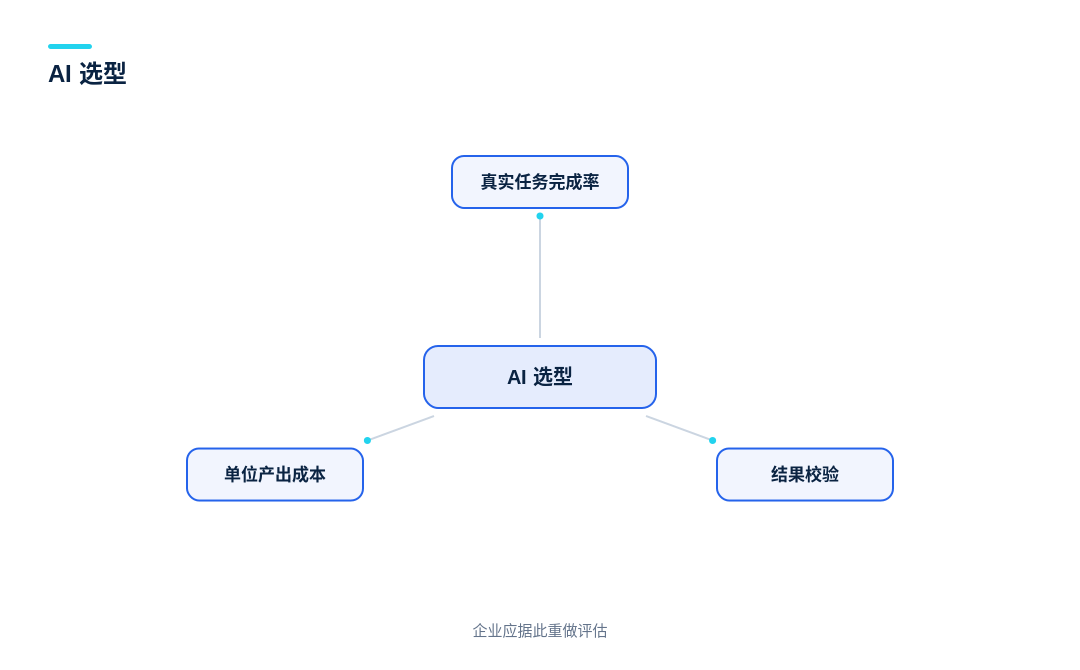
Today's assessment: Today's signals indicate that AI model selection is shifting from capability showcases to verifiable delivery and cost control. No agent scored above 12% in GDPx, while Gemini Omni 1.2 Flash also reduced 720p video pricing to $0.07 per second. Enterprises should reassess their choices accordingly, evaluating solutions based on real-task completion rates, result validation, and cost per output.
Models and Products: Video Generation Enters a Price War
Gemini Omni 1.2 Flash is now generally available, generating videos up to 15 seconds and supporting conversational, step-by-step editing, with pricing 30% lower than its predecessor. Tencent Hy4 brings image understanding and autonomous software operation together in one multimodal model. Enterprises can iterate faster on video and cross-interface automation, but should still validate stability, system integration, and cost per task before purchasing.
Research Frontiers: Agents Must Clear the Delivery Bar First
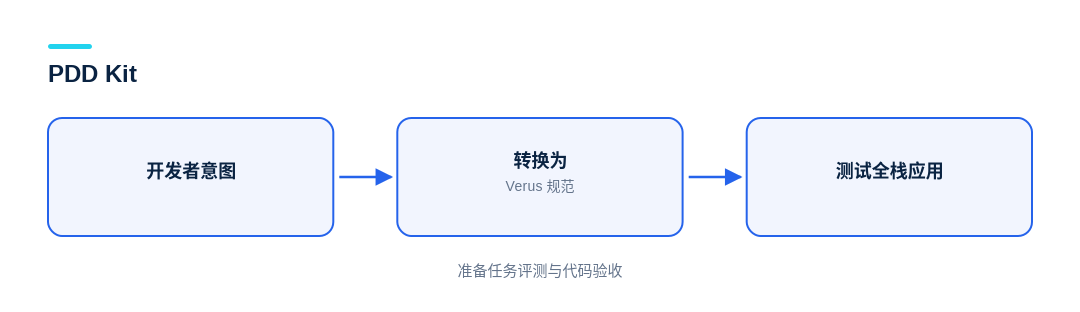
GDPx covers simulated knowledge work such as chip design and quantitative trading. No agent currently scores above 12%, and Claude Opus 5.5 is only slightly ahead of Gemini 4 Carbon; the source also notes the small sample size. PDD Kit converts developer intent into Verus specifications and tests full-stack applications against them. Enterprises need to prepare both task evaluations and code acceptance testing.
Open-Source Ecosystem: Open Models Reach the Foundation Layer
Baidu has released ERNIE 5.5 Flash Base as an open model with an MoE architecture totaling 280 billion parameters. It was pretrained on 33.5 trillion tokens without fine-tuning, while NVIDIA's open Cosmos 3 model focuses on interactive world simulation. Openness now extends to foundation models and simulation tools, but neither source fully discloses licensing or deployment details. Enterprises should begin with a technology radar and cost analysis.
Key Metrics
Today at a Glance
- Gemini maximum video duration
- 15sec
- Gemini 720p price per second
- 0.07USD/sec
- ERNIE 5.5 Flash Base total parameters
- 2800B
- GDPx highest public score
- 12%
Models and Products
Gemini Omni 1.2 Flash Now Available with 30% Lower Video Pricing
Google DeepMind announced that Gemini Omni 1.2 Flash is now generally available. The new version generates AI videos up to 15 seconds and supports conversational, step-by-step editing. Its 720p output is priced at $0.07 per second, 30% below the previous version. The source positions it as a video generation model but does not disclose comprehensive quality benchmarks or regional availability.
Improved video duration and pricing enable enterprises to scale short-video prototypes and batch testing, but buyers should still evaluate image quality, editing stability, and total cost using their own assets. For the latest vendor pricing and plan comparisons, see [AI Radar](/ai-radar/pricing).
Tencent Hy4 Adds Vision and Computer-Use Capabilities
Tencent released its first multimodal language model, Hy4, which understands images and can autonomously operate software. It scored 35 on the Artificial Analysis Intelligence Index. The vendor says it performs strongly on challenging mathematics and complex image analysis, but it still trails Kimi K3.1 Pro overall. Public information does not disclose access options, API pricing, or deployment requirements.
Combining visual understanding with computer operation gives enterprises a new option for cross-interface workflow automation. However, public information is insufficient to assess reliability and cost; a limited proof of concept in non-critical workflows is advisable.
Research Frontiers
GDPx: No Agent Scores Above 12% in Real-World Work Tests
SemiAnalysis released GDPx, a real-world work benchmark that tests AI agents through simulated knowledge work, including complex tasks in chip design and quantitative trading. No model currently scores above 12%; Claude Opus 5.5 is only slightly ahead of Gemini 4 Carbon. Critiques note the small task sample, suggesting the results are better viewed as a capability signal than a procurement conclusion.
High public rankings cannot replace business acceptance testing. Enterprises should build evaluation sets from their own tasks while tracking completion rates, costs, and failure modes, rather than purchasing solely based on a single leaderboard.
PDD Kit Uses Formal Specifications to Validate Agent-Generated Code
Microsoft Research introduced PDD Kit to formally verify full-stack web applications generated by agents. The tool converts developer intent into Verus formal specifications and tests the generated code against them, aiming to confirm that the code meets expectations rather than relying on manual, line-by-line review. Public information does not disclose supported scope, verification coverage, or production deployment data.
As agents increase code output, manual line-by-line review cannot provide sufficient coverage. Enterprises should incorporate executable specifications into development and acceptance pipelines, prioritizing critical business logic and framework compatibility.
Open-Source Ecosystem
Baidu Releases ERNIE 5.5 Flash Base as an Open Foundation Model
Baidu released ERNIE 5.5 Flash Base, an open foundation model. It uses an MoE architecture with 280 billion total parameters and was pretrained on 33.5 trillion tokens. This release was not fine-tuned, allowing developers to train and adapt it independently. Public information does not specify the active parameter count, license terms, or deployment prerequisites.
Open foundation models provide a path for private training and domain adaptation, but 280 billion total parameters can also increase infrastructure and operational burdens. Enterprises should first estimate inference costs, hardware requirements, and licensing boundaries; for more open-source project analysis, see [AI Radar](/ai-radar/opensource).
NVIDIA Launches Cosmos 3 Open Model for Interactive World Simulation
NVIDIA released the Cosmos 3 open model on Hugging Face for interactive world simulation. Only the product name, open status, and intended use have been disclosed so far; there are no details on parameter count, licensing, training method, benchmark performance, or deployment requirements. Enterprises can add it to their technology radar now and assess its fit with existing simulation workflows once the full official terms are available.
Open models add a new option for interactive world simulation, but current information is insufficient for production adoption. Enterprises should track licensing and deployment requirements before deciding whether to run a pilot.
Stay Connected with Zhaoxun
Receive daily updates on the latest AI and Information Security developments. Contact us about your security program needs.