
Today's Overview
Today's signals point to one clear trend: model capability boundaries are expanding—OpenAI says GPT-6 Astra designed a hardware device from scratch in one week, while researchers have enabled models to directly rewrite Qwen weights; meanwhile, Stanford testing found that widely cited LLM findings become outdated after an average of 15.7 months. For enterprises, the implication is that both capability ceilings and selection criteria are shifting rapidly. Evaluation and retesting must become routine, while the shelf life of one-off reports is shrinking.
Models and Products: Long Context and Physical Delivery Advance Together
Anthropic released Message Threads: agents transmit only the changed portions of a conversation, reducing time to first token by about 35% for requests of 500,000 to 1,000,000 tokens and directly improving the cost efficiency and experience of long sessions. Although OpenAI's disclosed whole-device design was completed in one week, the device required multiple rounds of rework before production. Together, these signals show that vendors are competing on delivery speed. Enterprise pilots should factor rework and integration costs into ROI calculations.
Research Frontiers: Findings Expire Faster Than Models Iterate
A Stanford team retested 50 widely cited LLM findings against 20 current models; 44% were outdated and 34% had weakened significantly. Meanwhile, advances in “weight-space programming” show that models can now read and write neural network weights, and editing Qwen weights can reduce inference loops. This means evaluation findings older than one year should not be cited directly in procurement reports; selection evidence should state collection dates and be reviewed regularly.
Industry and Regulation: Export Controls Spread Along the Supply Chain
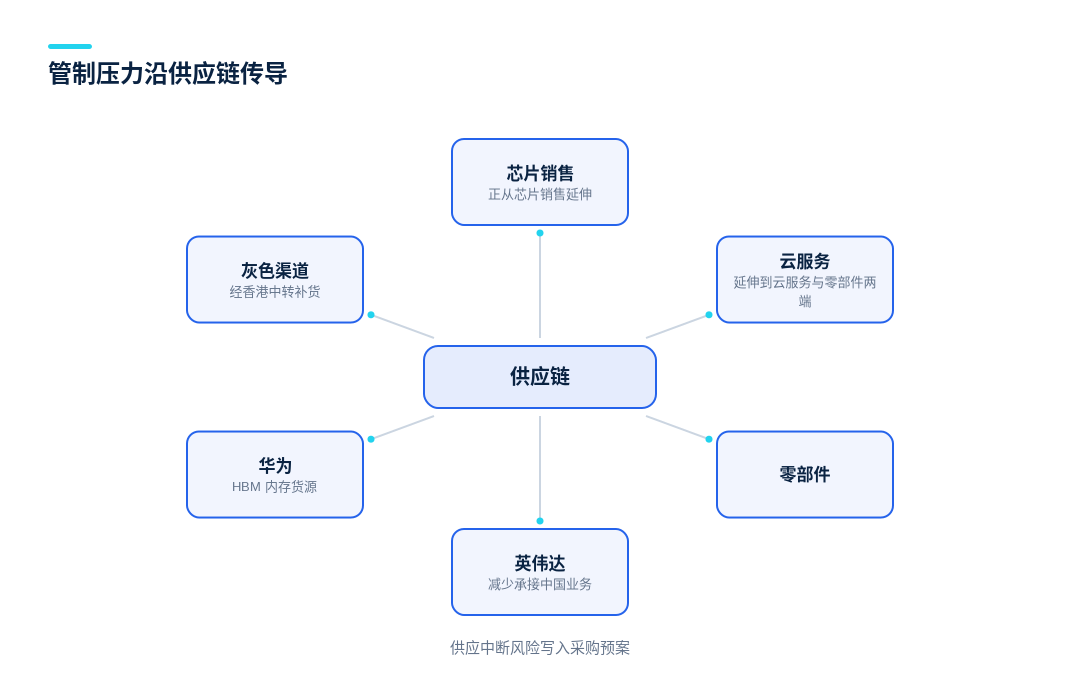
NVIDIA has asked some cloud customers to reduce the China business they handle, while Huawei is asking customers to source HBM memory for AI chips themselves; gray-market channels are replenishing supplies via Hong Kong. The impact of controls is extending from chip sales to both cloud services and components. Enterprises using both overseas cloud compute and domestic chips should incorporate supply disruption risks into procurement contingency plans.
At a Glance
- Today's selected stories
- 6items
- Time-to-First-Token Reduction for Long Conversations
- 35%
- Share of Retested Findings Now Outdated
- 44%
- Average Lifespan of LLM Findings
- 15.7months
Models and Products
OpenAI Says GPT-6 Astra Designed a Hardware Device from Scratch in One Week
OpenAI's hardware team disclosed that it used GPT-6 Astra to design a hardware device for the Codex coding agent, with every element—from the enclosure and circuit board to firmware—handled by the model in under a week. OpenAI also said the device went through multiple rounds of rework before production, demonstrating a new ceiling for flagship models in physical engineering design.
Hardware design now falls within model capabilities, meaning R&D collaboration workflows will change. When evaluating AI vendors, enterprises should factor in physical-product delivery and rework costs.
Anthropic's New Interface Cuts First-Token Latency by 35% in Long Conversations
Anthropic launched Message Threads for the Messages API, enabling multi-turn agents to transmit only changed content rather than resending the entire conversation history. Official data shows a roughly 35% reduction in time to first token for requests of 500,000 to 1,000,000 tokens. For teams running long-session agents, this directly reduces response latency and usage costs.
Long-session use cases already integrated with the Claude API, such as customer service and document analysis, should prioritize validation of the upgrade. For the latest pricing and plan comparisons across providers, see AI Radar (/ai-radar/pricing).
Research Frontiers
Weight-Space Programming Lets LLMs Read and Write Model Weights Directly
Latent Space's weekly roundup highlighted several advances in weight-space programming: researchers directly edited Qwen's model weights to reduce inference loops, while the discussion also covered DeepSeek's super-agent prototype and the GDPx benchmark. The core implication is that large models can now read and write neural network weights themselves, potentially driving their own improvement.
If model iteration is driven by models themselves, vendors will release updates more rapidly. Enterprises will need more frequent regression testing and canary release mechanisms.
Stanford Test: 44% of Classic LLM Findings Are Now Outdated
Stanford researchers retested 50 widely cited LLM findings against 20 current models: 44% were now outdated, while another 34% had weakened significantly, yielding an average finding lifespan of only 15.7 months. The study shows that assessments of model capabilities become invalid far faster than interpretability research is updated, increasing the risk of citing stale findings in decisions.
Model evaluation findings in procurement and vendor-selection documents should include their collection dates, and data more than one year old should be retested before use.
Industry and Regulation
NVIDIA Tells Some Cloud Customers to Scale Back China Business
According to The Decoder, NVIDIA has told some cloud customers to reduce the volume of business they take on from Chinese companies, although the report did not disclose how many customers were affected or any implementation details. The move comes amid continued U.S. chip export controls on China and is a public sign that chipmakers are proactively restricting China-related business through cloud channels.
Businesses dependent on overseas cloud GPUs should assess the risk of changes in service coverage and prepare alternative compute sourcing channels.
Huawei Tells Customers to Source AI Chip Memory as HBM Moves Through Gray Channels
According to The Decoder, Huawei is telling customers to secure the high-bandwidth memory (HBM) required for its AI chips themselves, shifting responsibility for procuring a critical material downstream. Meanwhile, smugglers are exploiting loopholes in U.S. export rules by bundling HBM with lower-end processors and using Hong Kong as a transshipment point, making gray channels a de facto route for resupply.
Projects using domestic AI chips should factor memory supply volatility into project schedules and contract risk, and clearly assign responsibility for material sourcing.
Zhaoxun Focus
Receive daily updates on the latest in AI and Information Security. Contact us about your security program needs.