Solution · Information Security

Security Risk Assessment Solution

For enterprise security decision-makers: covering five assessment scenarios—cloud, data, personal information protection (PIA), HK-SRAA, and vendors. Systematically identify risk exposure across business chains and third parties, and deliver actionable remediation roadmaps with reassessment baselines.

Solution Overview

Driving Security Investment Through Assessment—Making Risk Measurable and Actionable

As a core component of Zhaoxun's information security portfolio, security risk assessment answers the most fundamental question of any security program: where are the risks, how significant are they, and what should be addressed first? Many organizations are not short on security tools—they lack a trusted "risk baseline map." With blurred asset boundaries, complex third-party dependencies, and continuously shifting cloud configurations, risks scatter across every corner of the business chain. This solution uses the methodology outlined in GB/T 20984 (Information Security Risk Assessment) as its foundation, starting from asset identification, proceeding through threat identification, vulnerability identification, and validation of existing controls, to risk analysis and calculation, and finally delivering remediation recommendations aligned with business priorities.

A Multi-Framework Assessment Perspective

Building on this standard methodology, we incorporate the assessment dimensions of widely adopted frameworks such as MLPS 2.0, ISO/IEC 27001, and DSMM, designing specific assessment items for high-sensitivity scenarios including cloud environments, data flows, personal information processing, and supply chain collaboration. This ensures the conclusions can support both compliance response and direct technical remediation. Assessment is not a one-time exercise—the risk register and reassessment baseline produced in the first round allow the effectiveness of security investments to be verified in the next round.

Illustration of data flow and risk assessment perspective

Driven by Tools and Expert Collaboration

Assessment is more than running a scan. The continuous supply of asset and attack surface data, and the systematic comparison of compliance requirements, are handled by our proprietary platform. Business understanding, risk rating, and remediation trade-offs are handled by our security experts. The combination ensures that report conclusions are comprehensible, usable, and actionable.

Assessment Scenarios

Five Assessment Scenarios Covering Core Risk Surfaces

Cloud Security Risk Assessment

Map cloud assets and workload configurations, identify risks arising from identity and access permissions, network exposure, and configuration drift, and provide risk rating and hardening roadmaps aligned with business criticality.

Data Security Risk Assessment

Review the entire data lifecycle—collection, storage, usage, sharing, and destruction—to identify data-plane vulnerabilities and control gaps, and define risk exposure and governance priorities.

Personal Information Protection Impact Assessment (PIA)

Evaluate personal information processing activities to assess the alignment between processing purposes, methods, and security measures. Identify high-risk processing scenarios and deliver compliance-driven improvement and remediation recommendations.

HK-SRAA Assessment

Conduct assessments based on the Hong Kong Security Bureau's Cyber Health Assessment framework, helping organizations with local entities in Hong Kong or those serving Hong Kong customers to evaluate baseline cyber hygiene and produce a clear gap analysis.

Vendor Security Assessment

Assess the security management and data protection capabilities of third-party vendors and outsourcing partners, identify supply chain transmission risks, and incorporate third-party exposure into a unified risk management view.

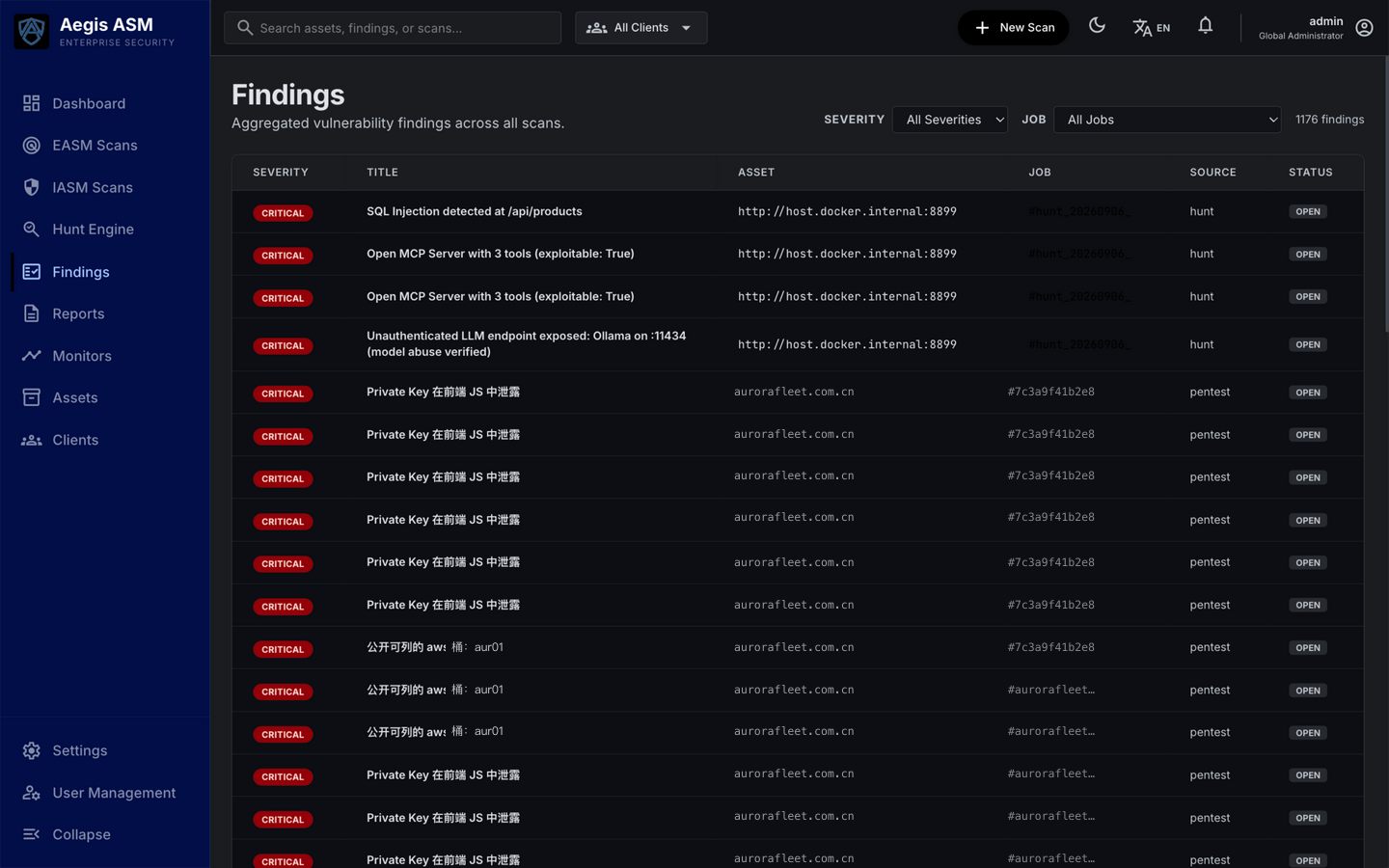
Aegis-ASM · Attack Surface Mapping Integration

Aegis-ASM · Attack Surface Mapping Integration

Our proprietary Aegis-ASM attack surface management platform continuously maps internet-facing exposure, providing real-time, accurate asset and attack surface data for assessment—so risk identification is built on the perspective of real attackers.

Learn More
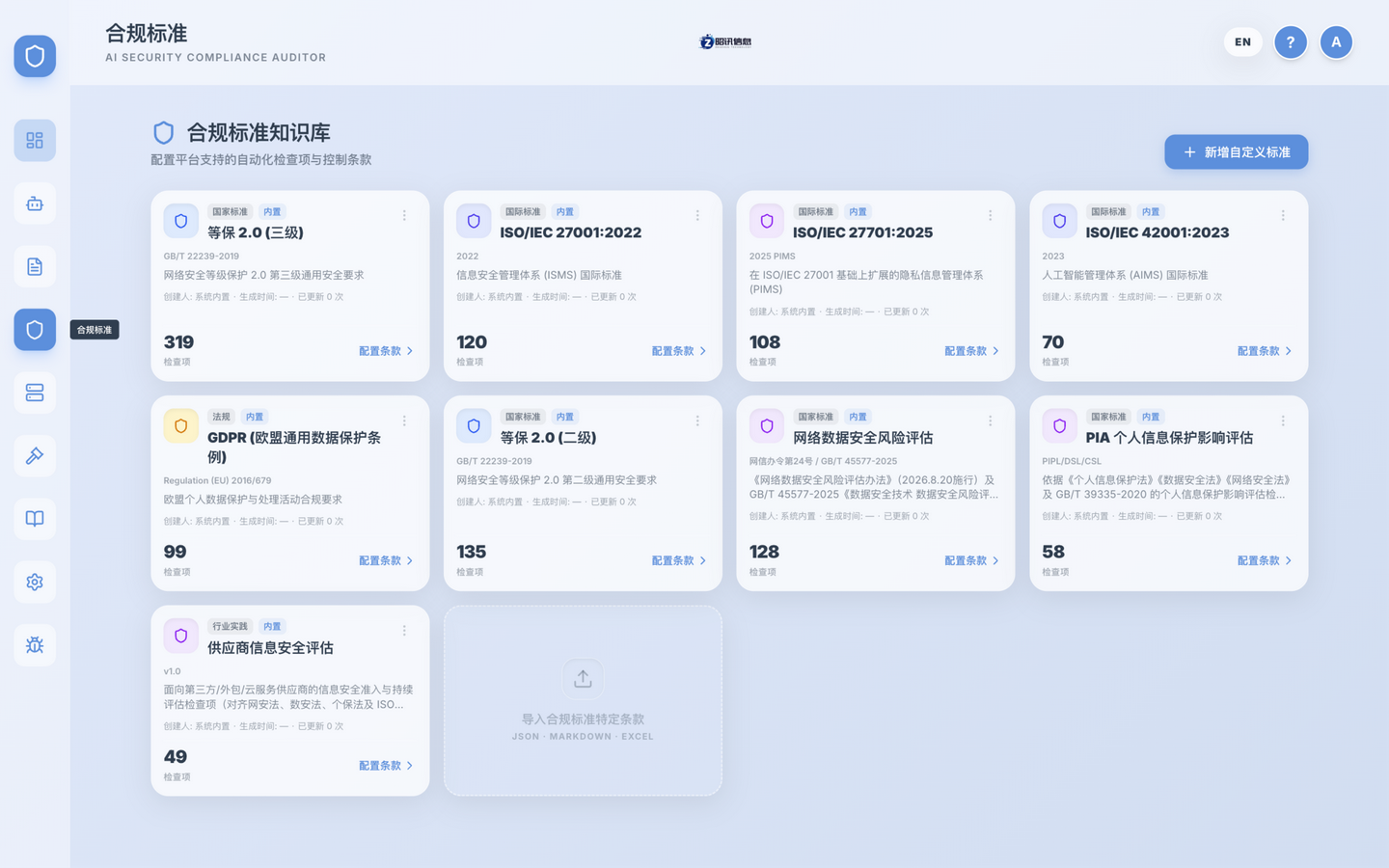
AI Guardian · Compliance Gap Integration

AI Guardian · Compliance Gap Integration

The AI Guardian compliance audit assistant comes with 9 built-in compliance standard packages, automatically comparing risk assessment results with compliance requirements to quickly identify gaps and shorten the path from risk discovery to compliance response.

Learn More

Assessment Process

A Five-Step Closed Loop, from Identification to Reassessment

Asset Identification

Inventory information assets and business systems, confirm the boundaries and business criticality of each, and build the assessment baseline.

Threat and Vulnerability Analysis

Identify internal and external threat scenarios facing assets, examine technical and management vulnerabilities item by item, and verify the actual effectiveness and coverage of existing security measures.

Risk Analysis and Rating

Calculate risk by combining threat likelihood and impact per the GB/T 20984 methodology, and rank risks according to business priorities.

Remediation Recommendations

Provide treatment recommendations and implementation roadmaps for each risk level, with clear priorities and expected outcomes, directly feeding into subsequent security investment.

Reassessment

After remediation, verify the effectiveness of actions against the reassessment baseline, confirm risk convergence, and establish a continuously measurable reference for security posture.

Deliverables

Every assessment project is wrapped up with standardized deliverables, ensuring that conclusions can feed directly into remediation and reassessment.

DeliverableContentsValue
Risk Assessment ReportPresents the full assessment scope, methodology, findings, and risk calculation process, covering conclusions across all five assessment scenariosProvides management with directly citable decision support to prioritize security investment
Risk Register and Remediation RoadmapItemizes each risk, its level, the corresponding treatment, and implementation sequenceEnsures remediation has a clear list, roadmap, and priorities—with no ambiguity in execution
Reassessment BaselineCaptures asset status, risk levels, and control status at the time of the initial assessmentEnables post-remediation reassessment to verify risk convergence and supports long-term, continuous measurement

Risk Exposure

Four Categories of Risk Exposure, Systematically Identified

Business Chain Risk Exposure

Single points of failure and breakpoints within business dependencies are often invisible until an incident occurs.

Hover / tap to flip ↻

Starting from business processes, map system, personnel, and process dependencies to identify the most impactful critical risk points, prioritizing treatment by business importance.

Third-Party Risk Exposure

Security weaknesses in vendors, outsourcing partners, and collaborators can transmit directly into your own business.

Hover / tap to flip ↻

Examine how partners access your systems and data, identify data and permission exposure arising from outsourcing and collaboration, and define gaps that must be addressed through contractual and management controls.

Data Risk Exposure

Data can be unexpectedly exposed or misused during collection, transfer, and sharing.

Hover / tap to flip ↻

Focus on sharing and transfer, track where data goes and who can access it after leaving established boundaries, identify unexpected exposure points, and provide control recommendations.

Cloud Configuration Risk Exposure

Misconfigurations in cloud permissions, storage, and networking are common high-risk entry points for attackers.

Hover / tap to flip ↻

Review configuration deviations across permissions, storage public exposure, and network reachability, identify high-risk entry points that can be directly exploited from outside, and define the hardening sequence.

FAQ

About Security Risk Assessment

Which standards underpin the assessment methodology?

The solution follows the methodology outlined in GB/T 20984 (Information Security Risk Assessment), forming a complete closed loop from asset identification, threat identification, vulnerability identification, and existing control validation through to risk analysis, calculation, and remediation recommendations. For data and personal information scenarios, additional frameworks such as DSMM are referenced when designing assessment items.

Which organizations is the HK-SRAA assessment suitable for?

HK-SRAA originates from the Hong Kong Security Bureau's Cyber Health Assessment framework. It is suited to organizations with local entities in Hong Kong or those serving Hong Kong customers, for validating baseline cyber hygiene and serving as reference material demonstrating security capability in external collaboration.

Which tools are used in the assessment?

The assessment combines two proprietary tools with our expert team: Aegis-ASM supplies asset and attack surface data, and AI Guardian is used for compliance gap analysis (see the integration section above for details). Business understanding, risk rating, and remediation trade-offs are handled by our experts.

How is remediation follow-through ensured after the assessment?

In addition to the risk assessment report, we also deliver a risk register and remediation roadmap, plus a reassessment baseline. Once remediation is complete, a reassessment is conducted against the baseline to verify risk convergence. Organizations may also embed the reassessment mechanism into ongoing security operations.

How do assessment results connect with existing security investment?

Assessment conclusions are mapped to frameworks such as MLPS 2.0 and ISO/IEC 27001, so they can be directly tied to subsequent security investment and compliance preparation—avoiding a disconnect between assessment and execution.

About Zhaoxun

A Security Partner Where Integration Meets Service

Founded in 2022, Shanghai Zhaoxun Information Technology Co., Ltd. is both an IT integrator and a security service provider—an ISO/IEC 27001:2022 certified company and a Sangfor Gold Partner. We combine our proprietary platform with expert services to transform one-off assessment conclusions into sustained security operations capability.

    Explore Our Proprietary Products

    2022

    Year Founded

    Start your next security decision with a trusted risk baseline

    Submit your assessment requirements, and we will propose the assessment scope and implementation approach based on your business context and compliance needs.